

THE KROGER GUIDE
Gluten-free
shopping at Kroger.
One plan for Kroger and every store in its family. The aisles, the counters, the labels and the pickup details.
Explore the aisles Shop at Ralphs, Fred Meyer or King Soopers? Start hereBy Let’s Go Gluten Free · Independent of Kroger.
Sources checked · Sources & approach
Where do you want to start?
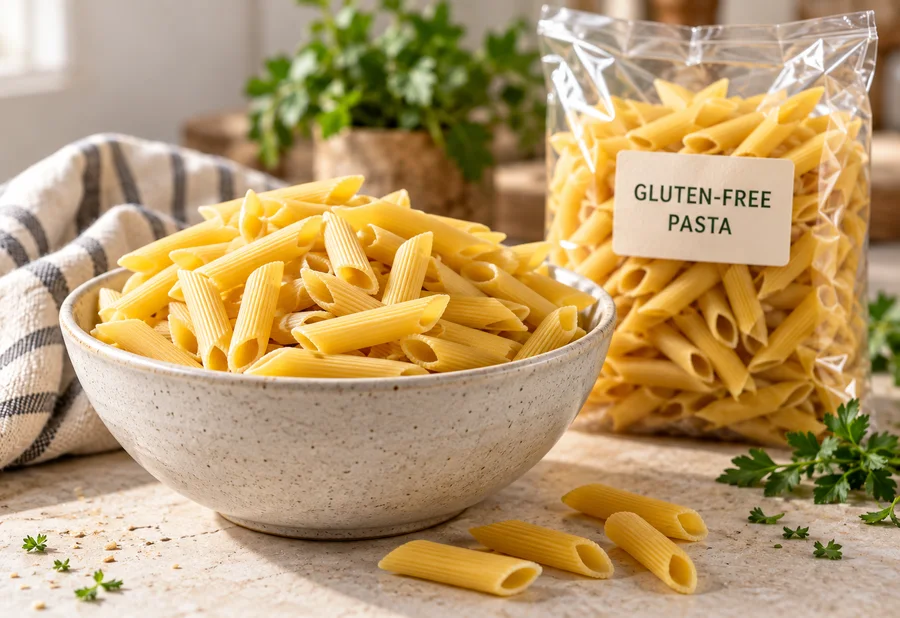
Pasta & noodles
Pick one shape for a dinner you already make.
See pasta checklist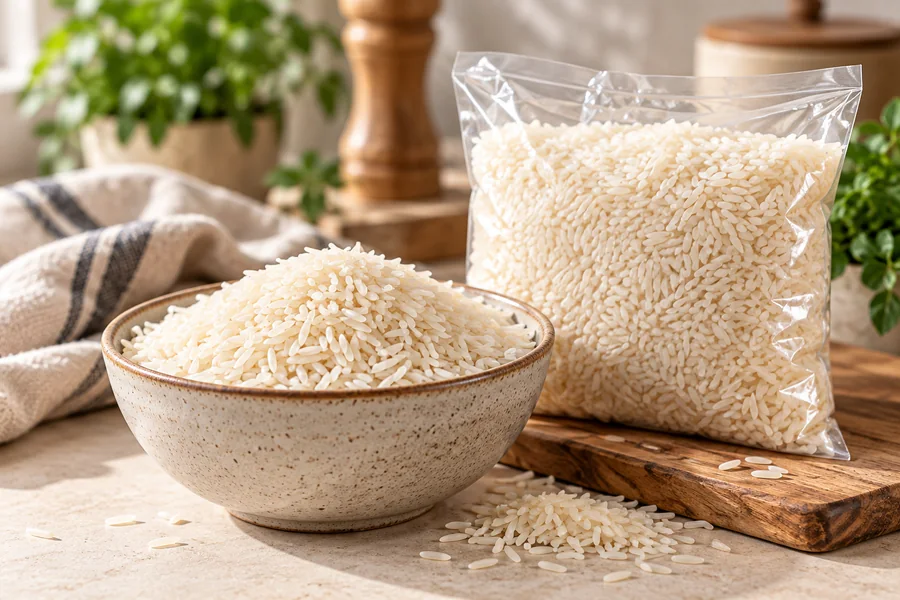
Rice & grains
Plain rice is simple. Seasoned mixes need a closer look.
See rice checklist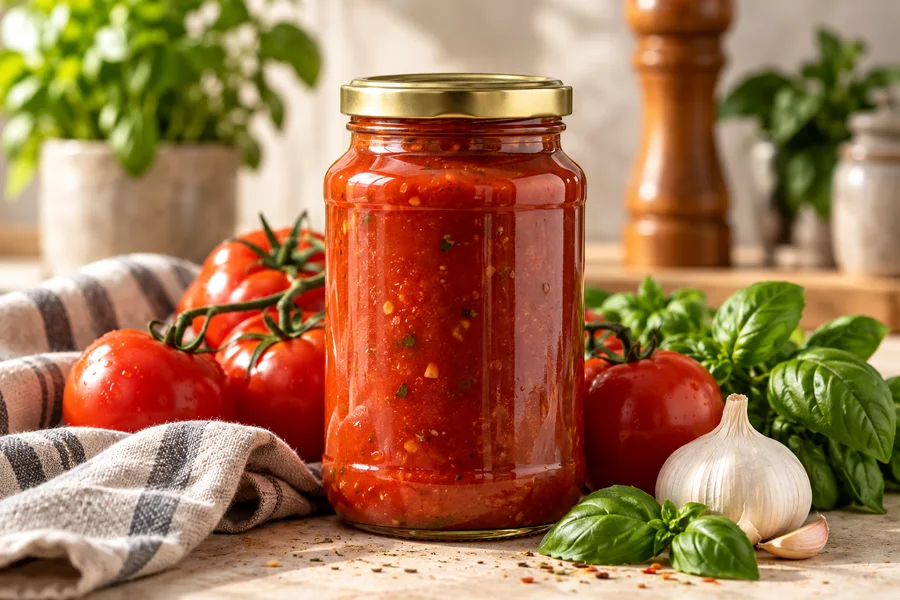
Sauces & seasonings
Soy sauce is the classic trap.
See sauce checklist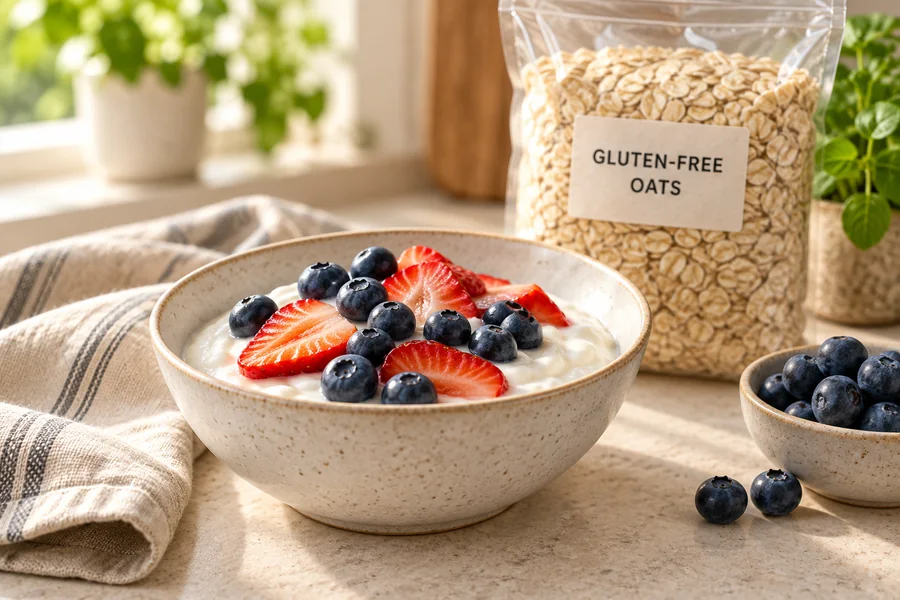
Breakfast & baking
Oats and flour deserve the most care.
See breakfast checklist
Snacks & lunchboxes
Same brand, different flavor, different answer.
See snacks checklist
Frozen meals & bread
Gluten-free bread often lives in the freezer.
See frozen checklist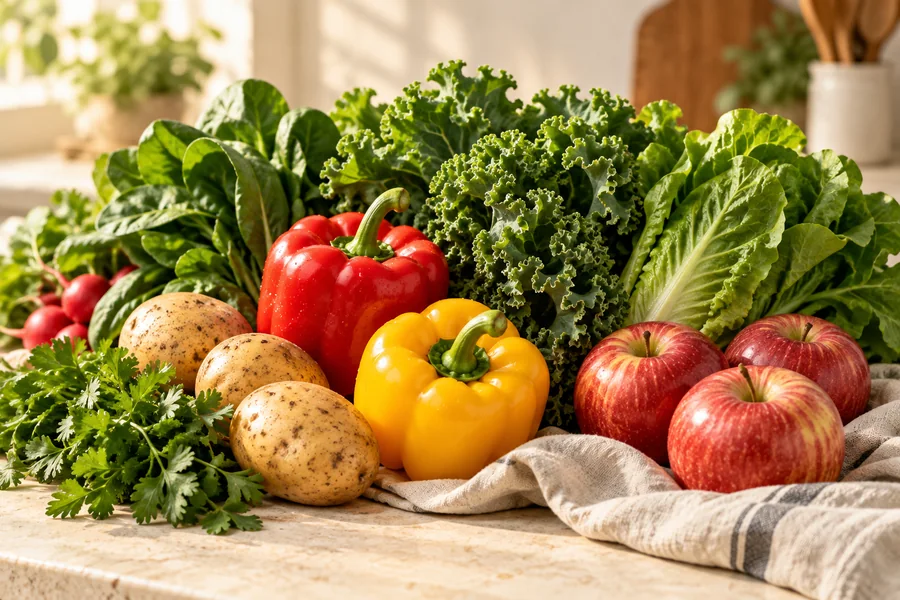
Produce & simple staples
Whole foods first. Prepared foods are a different check.
See fresh checklistNo matching aisle or help section. Try “deli,” “Simple Truth” or “pickup.”
Aisle ideas, not a live Kroger inventory. Images are AI-generated illustrations, not product or store-visit photos.
Your Kroger run, organized.
Exact items, counter notes and backups. One list in this browser.
ONE COMPANY, MANY STORE NAMES
Same Kroger.
Maybe a different sign.
Kroger runs about 2,700 supermarkets, many under regional names: Ralphs in Southern California, Fred Meyer and QFC in the Pacific Northwest, King Soopers in Colorado, Harris Teeter in the Southeast and more. This guide works at all of them, with the same store brands, the same counters to approach with care and, for most, the same app.
You don’t need to restock the whole pantry on the first trip. One dinner, a breakfast you’ll repeat, a snack and a backup meal make a better start than a cart full of experiments.
Browse Kroger’s gluten-free diet page (opens in a new tab)01 / YOUR STORE
Find your Kroger,
whatever it’s called.
Kroger operates about 2,700 supermarkets in 35 states, and many of them carry a regional name instead of Kroger’s. Ralphs, Fred Meyer, King Soopers, Fry’s, Smith’s and the rest sell Kroger’s own brands, and most run their websites and apps on Kroger’s platform. So one guide covers them all. The one notable exception is Harris Teeter, which runs its own website and app.
MAKE THIS GUIDE YOURS
Which name is on your store?
You shop at Kroger.
Everything on this page applies as written, on Kroger’s website and in the Kroger app.
Your choice changes the wording on this page and is remembered in this browser only.
- Set your store first. On your store’s website or app, choose the location you’ll shop so what you see matches its shelves.
- Search the exact food. Try the item plus “gluten free,” then narrow to the variety and size you want. Kroger’s gluten-free diet page is a good place to browse.
- Open the product page. Use the package photos and ingredient list to make a shortlist, but treat the listing as a lead. Packages change, and the box on the shelf is the one that counts.
- Find it in the aisle. Gluten-free items may sit beside their regular versions rather than in one section. If you can’t find something, ask an associate; every store is set up differently.
Newly diagnosed? Kroger Health offers virtual nutrition sessions with registered dietitians, and in February 2025 Kroger announced a free 30-minute virtual session with a Kroger Health dietitian for its loyalty members. Check the current terms on Kroger’s health pages. A dietitian can turn the advice here into a plan for your household.
02 / KROGER’S OWN BRANDS
“Free From 101”
doesn’t mean gluten-free.
Kroger’s store brands, which it calls Our Brands, fill a large share of every aisle, and the same brands appear across the Kroger family of stores. They’re worth knowing, because the brand name tells you about price and style, not about gluten.
The Simple Truth mix-up
Simple Truth is Kroger’s natural and organic line. Its promise is to be “Free From 101 artificial ingredients our customers do not want”: artificial colors, flavors, preservatives and sweeteners. Gluten isn’t part of that promise. Some Simple Truth products are labeled gluten-free and many aren’t, so the package decides, not the logo.
Source: Kroger’s Simple Truth “Free From” page and Kroger’s January 2023 Simple Truth announcement.
SIMPLE TRUTH
Natural & organic
Includes Simple Truth Organic. Some items say gluten-free on the package; check the exact flavor and size every time.
KROGER BRAND
Everyday staples
The basics in nearly every aisle. A plain staple and a flavored version under the same name are separate checks.
PRIVATE SELECTION
Premium picks
Kroger’s trade-up line for sauces, cheeses, desserts and more. Read the label as closely as any other brand.
SMART WAY
Budget basics
Kroger’s budget-conscious line. Plain single-ingredient items can be useful; anything seasoned or mixed needs a full read.
BAKERY FRESH GOODNESS
A bakery brand
When a baked item comes from the bakery department rather than a sealed gluten-free package, treat it like the in-store bakery (see the counter map).
HOME CHEF & MURRAY’S
Meal kits & cheese
Both are Kroger brands. Meal kits combine many components to check, and cut-to-order cheese shares a counter and its tools.
Brand names here come from Kroger’s corporate Our Brands page. This guide doesn’t claim any Kroger brand, or every product in one, is gluten-free, certified, in stock or tested by our family. When a store brand gives you a good gluten-free staple, write down the exact item so you can find it again.
Want brand ideas we’ve actually lived with? Katie’s Picks lists the gluten-free products in our own family’s cart, updated monthly.
03 / BUILD A SHORT, SPECIFIC CART
Your aisle-by-aisle checklist.
Open an aisle for what to watch and a starting list item. Then make the wording exact, with the brand, flavor and size, before you save it. The more specific the entry, the less a pickup shopper or a tired weeknight version of you has to guess.
Pasta & noodles
Gluten-free pasta may sit right beside the regular boxes instead of in a separate section, so the package next to yours can be the wheat version of the same shape. Read the front and the ingredient list of the exact box you pick up.
- Treat each shape and flavor as its own product, even within one brand.
- Write the size on your list so a pickup shopper can match it.
- Corn, rice, chickpea and lentil pastas cook differently. Try one box before stocking up.
Rice & grains
A bag of plain rice, a seasoned side dish and a microwave pouch are three separate checks. Pilaf-style mixes can include orzo, which is a wheat pasta, and flavor packets can carry their own gluten-containing ingredients.
- Prefer plain grains labeled gluten-free. Unlabeled grains and flours can pick up gluten in fields and mills.
- Skip the bulk bins for rice, quinoa, oats and flour (see the counter map below).
- Compare dry weight with dry weight when checking value.
Sauces & seasonings
Traditional soy sauce is brewed with wheat, so teriyaki, stir-fry sauces and marinades built on it often contain gluten too. Look for tamari or a soy sauce labeled gluten-free, then read gravy mixes, bouillon and seasoning blends the same way.
- Record the flavor and bottle size, not just the brand.
- Malt vinegar and malt flavoring come from barley. Look for them in dressings, chips and sauces.
- If a label leaves a question open, ask the manufacturer before relying on it.
Breakfast & baking
Oats are usually grown and milled alongside wheat, so choose oats and oat products labeled gluten-free, and ask your care team whether oats suit you. Flours and baking mixes carry the same risk; a gluten-free label matters more here than almost anywhere else in the store.
- Read granola, cereal and pancake mixes flavor by flavor.
- “Organic,” “natural” and “wheat-free” are not gluten-free claims.
- Buy a small bag of an unfamiliar flour blend before committing to a large one.
Snacks & lunchboxes
Chips and crackers are where look-alike packages hide different recipes. A salt-and-vinegar flavor can use malt vinegar, and a variety pack can mix gluten-free bags with regular ones.
- Check every flavor, and every bag inside a multipack.
- Seasonal and limited-edition packs need a fresh read, even from a familiar brand.
- Match other household allergies separately from the gluten-free check.
Frozen meals & bread
Many gluten-free breads, buns, waffles and pizzas are sold frozen, and a few sit near the regular bread instead. For a frozen meal, the crust, breading, sauce and toppings are all part of one check.
- Meals made with meat or poultry often carry a USDA mark, which changes what the label must tell you. See the package check below.
- Plan freezer space and the trip home before buying a large pack.
- Add a substitution note for any frozen item you don't want swapped.
Produce & simple staples
Whole fruit and vegetables, eggs, plain milk and plain cuts of meat make an easy base for the week. Once a food has been cut, seasoned, dressed or cooked in the store, it becomes a counter question instead.
- Plan amounts for the meals you've chosen, with room for leftovers.
- Store-cut fruit, salad kits and veggie trays are prepared foods. Read their labels.
- Check dressings, croutons and toppings separately from the greens.
04 / THE COUNTERS
Walk the counters with a plan.
Packaged food comes with a label. Counters come with shared slicers, scoops, fryers and flour in the air. Most Kroger-family supermarkets have a deli, a bakery and a meat case, and many add prepared foods, sushi, bulk bins or a salad bar. Pick a department to see the risk, what to say and what to buy instead.
DELI COUNTER
Ask firstSliced to order means a shared slicer.
Even when a meat or cheese has no gluten ingredients, the slicer, knives and case are shared with breaded and gluten-containing products. Processed lunch meats can also contain gluten themselves, so the ingredient label for the exact product matters.
The National Celiac Association suggests asking staff to clean the slicer and change gloves before preparing your order.
Say this at the counter
“I have celiac disease. Could you clean the slicer and change gloves before you slice this? And may I see the ingredient label?”
What to do
- Ask when the counter is quiet. Cleaning a slicer takes a few minutes.
- Or pick a sealed, gluten-free-labeled package from the case, which keeps the slicer out of the question.
- If you can't get a clean slicer or a label, skip it this trip.
MEAT & SEAFOOD
Ask firstPlain cuts are simple. Marinated ones aren't.
A plain steak, chicken breast or fish fillet has nothing added. Pre-seasoned meats, self-basting poultry and anything marinated in soy or teriyaki sauce can contain gluten, and stuffed or breaded items usually do.
Meat and poultry follow USDA labeling, not FDA’s gluten-free rule. Every ingredient must be listed, so the ingredient line is your best tool. Watch for starch or dextrin with no source named.
Say this at the counter
“Is this plain, or has anything been added? Could I see the ingredient label for the seasoning or marinade?”
What to do
- Buy plain cuts and season them at home.
- Read the full ingredient list on anything seasoned, stuffed, marinated or breaded.
- Treat seafood salads and crab cakes as prepared foods. They're a different check.
PREPARED FOODS
Ask firstReady-made means made in a shared kitchen.
Rotisserie chickens, deli salads, sides and fried foods are cooked in the store’s kitchen alongside breaded and wheat-based items. The Gluten Intolerance Group warns that prepared foods can pick up gluten anywhere between the production kitchen and the case.
Fried foods are a particular risk. In a 2021 study of shared restaurant fryers, gluten turned up in 9 of 20 orders of fries.
Say this at the counter
“Is there an ingredient list for this? Is it fried in the same oil as anything breaded?”
What to do
- Read the label on packaged prepared foods. Seasoning blends, gravies and sauces are common gluten sources.
- If fried items share oil with breaded foods, or nobody knows, skip them.
- For a dependable ready meal, a gluten-free-labeled frozen meal is often the simpler choice.
BAKERY
Usually skipAn in-store bakery works with wheat flour all day.
Beyond Celiac notes that flour can stay airborne for 12 to 24 hours, depending on ventilation and how much is used, and names bakeries among the places it happens. That makes unwrapped bakery items hard to trust with celiac disease, even when a recipe contains no wheat.
Sealed gluten-free breads, buns and desserts made elsewhere are a different product. Many are sold frozen. Read their labels like any other package.
Say this at the counter
“Is this made here, or does it arrive sealed from its maker with a gluten-free label?”
What to do
- Choose sealed, gluten-free-labeled baked goods over anything unwrapped.
- Check the freezer case for gluten-free bread, buns, waffles and desserts.
- For a birthday cake, plan ahead with a dedicated gluten-free bakery or bake at home.
SUSHI
Ask firstThe rice may be fine. The extras often aren't.
Beyond Celiac flags regular soy sauce, imitation crab (made with a starch that often contains wheat), tempura, eel sauce and some spicy sauces as common gluten sources in sushi. A packed tray can include any of them, plus a soy sauce packet.
Say this at the counter
“Does this have imitation crab, tempura or a sauce made with wheat? Could you make a roll on a clean board with gluten-free tamari?”
What to do
- Read the tray label, and skip rolls with imitation crab, tempura or crunchy toppings.
- Use your own gluten-free tamari at home instead of the packet.
- Not every store has a sushi counter. If yours does, ask before ordering a fresh roll.
BULK BINS
Usually skipShared scoops, open bins.
The Celiac Disease Foundation recommends against buying grains from bulk bins, and the National Celiac Association says to buy grains and beans in sealed packages labeled gluten-free. Scoops move between bins, and neighboring products spill over.
Unlabeled grains carry risk even when sealed. A 2010 study of naturally gluten-free grains, seeds and flours that weren’t labeled gluten-free found 7 of 22 samples at or above 20 parts per million.
What to do
- Buy rice, beans, oats, nuts and flours in sealed packages labeled gluten-free.
- Skip the bins even for foods that are naturally gluten-free.
SALAD & HOT BARS
Usually skipSelf-serve means everyone's spoon.
Croutons, pasta salads and breaded toppings sit inches from everything else, and serving utensils travel between pans. The Gluten Intolerance Group says salad bars are best avoided unless the operation has been validated as gluten-free, and Beyond Celiac points out that there’s no guarantee buffet food hasn’t touched gluten.
What to do
- Build a salad at home from packaged greens and toppings you've checked.
- For lunch on the go, pick a sealed, gluten-free-labeled meal instead.
PRODUCE
Lower riskWhole produce is the easy start.
Whole fruit and vegetables are naturally gluten-free. The questions start when the store cuts, dresses or packs them: fruit cups, veggie trays with dip, salad kits and anything with a topping.
What to do
- Build meals around whole produce.
- Read the label on store-cut fruit and vegetable trays. They're prepared foods.
- Treat salad kits as packaged foods. The croutons and dressing decide the answer.
Risk levels are our reading of guidance from celiac organizations, not a rating of any particular store. Every counter, and every answer you get at one, can differ. More on shared tools in our cross-contact explainer.
05 / THE PACKAGE IN YOUR HAND
Read the label, then decide.
For foods regulated by the FDA, a “gluten-free” claim is voluntary, and a food that carries it must contain less than 20 parts per million of gluten. A certification seal is a separate program with its own standard: the Gluten-Free Certification Organization (GFCO), for example, certifies to 10 ppm or less.
Two details trip people up. Wheat is a major allergen that must be named on the label, but barley and rye are not, so malt or malt extract can carry barley without saying so. And when a gluten-free food lists wheat, as with specially processed wheat starch, the FDA requires a statement that the wheat was processed to meet its gluten-free rule.
Source: FDA questions and answers on the gluten-free labeling rule.
Meat, poultry and some egg products follow USDA labeling instead, and the FDA’s gluten-free rule doesn’t apply to them. USDA requires every ingredient to be listed, but allergen statements on those packages are voluntary, and we found no USDA rule that sets a parts-per-million limit for its gluten-free claim. Beer, wine and spirits fall under the Alcohol and Tobacco Tax and Trade Bureau; a beer “crafted to remove gluten” has to say its gluten content can’t be verified.
Source: NIDDK on eating and diet with celiac disease. Alcohol rules: TTB Ruling 2020-2.
THE 60-SECOND PACKAGE CHECK
Holding a package? Answer up to four questions.
It works for any brand on any Kroger shelf, including Kroger’s own. It reads the label with you; it can’t test food or see how a factory runs.
- Gluten-free claim, nothing conflicting: it passes the label check. Record the exact brand, flavor and size.
- Gluten-free claim next to wheat, barley, rye or malt: hold it and ask the manufacturer. Wheat needs the FDA’s processed-wheat statement.
- No claim, and wheat, barley, rye, malt or unlabeled oats listed: leave it.
- No claim, no gluten ingredients: the label doesn’t cover shared equipment. Prefer a labeled version, especially for grains, flours, beans and oats.
- USDA-inspected meat, poultry or egg product: read every ingredient, including starch or dextrin with no source named.
Lists of “gluten-free Kroger products” go stale. Packages change, claims come and go, and labels are sometimes simply wrong: Gluten Free Watchdog reported a Kroger-brand salt and vinegar chip to the FDA in 2021 because it was labeled gluten-free while listing malt vinegar powder, a barley ingredient. The package you’re holding is the current answer. For a deeper walkthrough, see how to read food labels for hidden gluten.
LABEL HELP, IN YOUR POCKET
Want a second pair of eyes?
Scan or paste an ingredient list into our free label scanner, then compare its explanation with the package. It reads what you give it; it can’t test food or rule out cross-contact.
06 / BEFORE SOMEONE ELSE SHOPS FOR YOU
Decide on substitutions
before your order is picked.
Pickup
Order online and collect at the store. Harris Teeter calls its version ExpressLane.
Delivery
Kroger delivers from stores and from its fulfillment centers. Check fees and timing at checkout.
Other apps
Kroger also sells through third-party delivery platforms. Their substitution settings are their own; set them there.
Kroger’s pickup help page says you choose whether to allow substitutions when you place an order online, and that gluten-free and other special dietary items “will always be substituted with items that meet the same dietary requirements.” If a substitute isn’t right, you can refuse it before your order is loaded into your car, or return it to a store later for a full refund.
Source: Kroger pickup help. App and website options can change; use the controls shown on your order.
That policy is a good safety net, not a label check. A substitute that “meets the same dietary requirements” is still a product you haven’t read. Our approach: allow a replacement only where you’ve named an exact backup you trust, and give every substitute the package check before it goes in the pantry.
07 / SPEND LESS, CHECK THE SAME
Save money without
loosening the label rules.
Gluten-free staples cost more, so the savings habits matter. Compare price per ounce or per item rather than box size, and buy a small package of anything new before committing to the family size. A deal on a product you haven’t checked isn’t a deal.
Kroger’s rewards program is free to join. Members earn Points on purchases, and since June 2026 can redeem them for dollars off groceries as well as fuel discounts. Boost, the paid membership, doubles Points and adds free delivery perks. Load digital coupons only for gluten-free items you’ve already checked, and treat a “buy more, save more” offer on an unfamiliar product as a trial run. Program terms change, so confirm them on Kroger’s site before counting on a discount.
Which package costs less per unit?
Enter the shelf or online prices you’re comparing, in the same unit for both. This compares cost only, not gluten-free status, nutrition or taste.
Shopping more than one store? Our Walmart guide, Target guide and Costco guide work the same way, and the $100 gluten-free grocery challenge shows how far a real budget stretches. No store wins on every item, so compare the things you actually buy.
WHAT SHOPPERS ASK
Kroger gluten-free questions.
Does Kroger have a gluten-free aisle?
Not reliably. Many Kroger-family stores now shelve gluten-free products beside their regular versions, so gluten-free pasta sits with the pasta and gluten-free crackers with the crackers. Some stores still have a natural foods area or shelf tags, and those vary by store. Search the item for your store in the Kroger app or website, or ask an associate, then check the package wherever it’s shelved.
Is Simple Truth gluten-free?
Not as a brand. Simple Truth’s promise is to be free from 101 artificial ingredients, such as artificial colors, flavors, preservatives and sweeteners, and gluten isn’t part of that list. Some Simple Truth products carry a gluten-free label and many don’t, so check each package, flavor and size.
Does Kroger have a list of gluten-free products?
Kroger’s website has a gluten-free diet page that works as a browsing starting point, but we aren’t aware of a current, complete list. Lists passed around online are often years old, and shoppers have reported Kroger-brand items dropping their gluten-free claims or adding “may contain wheat.” Use any list to find candidates, then read the current package.
Can I ask the Kroger deli to clean the slicer?
Yes, and it’s worth asking. The National Celiac Association suggests asking staff to clean the slicer and change gloves before slicing your order, and to see the ingredient label for the exact meat or cheese. A sealed, gluten-free-labeled package skips the slicer question entirely.
Does the Kroger bakery sell gluten-free bread?
Look for sealed gluten-free bread, buns and desserts made by their producers, often in the freezer case, rather than unwrapped items from the in-store bakery. In-store bakeries work with wheat flour, which can stay in the air for hours, so we treat unwrapped bakery items as a skip for celiac disease.
Can Kroger pickup swap my gluten-free item for a regular one?
Kroger’s pickup help page says gluten-free and other special dietary items “will always be substituted with items that meet the same dietary requirements,” and you can choose whether to allow substitutions when you order. A replacement can still be a product you haven’t checked, so look at each substitute before you accept it. You can refuse substitutes before your order is loaded, or return them to a store later for a refund.
Does this guide work at Ralphs, Fred Meyer, King Soopers and other Kroger stores?
Yes. Ralphs, Fred Meyer, QFC, King Soopers, City Market, Fry’s, Smith’s, Dillons, Baker’s, Mariano’s, Pick ’n Save and Metro Market are Kroger-family stores that sell Kroger’s own brands, and their websites and apps run on Kroger’s platform. Harris Teeter is also part of the family but has its own website and app, with pickup called ExpressLane, so check its own substitution settings. The aisle, counter and label advice applies everywhere.
Will this list sync with my Kroger account?
No. It’s a planning list saved in this browser when storage is available, shared with our grocery hub and the Walmart and Target guides on this site. It doesn’t connect to Kroger, your Kroger account, another device or our Meal Planner. Copy, download or print it to take it with you.
HOW WE BUILT THIS GUIDE
What this guide is based on.
Let’s Go Gluten Free prepared this independent guide from Kroger’s published pages and from celiac and food-labeling authorities, each cited beside the advice it supports. We checked those sources on October 2, 2026. That date records a source review, not a store visit or a product test.
Labeling rules come from the FDA’s gluten-free rule (21 CFR 101.91) and its question-and-answer guidance, USDA Food Safety and Inspection Service labeling guidance, TTB Ruling 2020-2 and the National Institute of Diabetes and Digestive and Kidney Diseases. Counter advice draws on the Celiac Disease Foundation, Beyond Celiac, the National Celiac Association and the Gluten Intolerance Group. The research we cite is Thompson, Lee and Grace (Journal of the American Dietetic Association, 2010) on unlabeled grains and flours, and Thompson and colleagues (2021) on shared fryers.
We don’t publish a product list, prices, local inventory or a claim that any brand is entirely gluten-free. Labels, assortments, app features and policies change, and stores in the Kroger family differ. The counter risk levels and shopping steps are our editorial guidance.
All food and store imagery here is AI-generated illustration. It doesn’t show a particular product, a Kroger store or our own shopping trip. Kroger is not affiliated with or responsible for this guide.
Spotted a change? Send us the page detail and what you saw. For a product, the exact name, flavor, size and the date on the label help us check it.
General shopping education, not individual medical advice. For questions about your own diet or diagnosis, talk with your clinician or a registered dietitian.
READY FOR YOUR NEXT KROGER RUN?
Know your counters.
Keep your list short.
FREE DOWNLOAD
Get the 4-Week Gluten-Free Meal Plan
Twenty weeknight dinners, each week with its own grocery list grouped by store section. Fill your Kroger list in minutes. Free, as a printable PDF.