

In this guide
Start Here
If you’ve just been told to go gluten-free, take a breath — you’ve got this. The short version: gluten is a protein in wheat, barley, and rye, so you’ll learn to avoid those three grains, lean on the many foods that are naturally gluten-free, and read a label in about ten seconds. That’s the whole foundation.
This hub walks you through the essentials in plain language — what gluten is, who actually needs to avoid it, what’s safe to eat, how to read a label, where cross-contamination hides, and a calm five-step plan for your first two weeks — then points you to the deeper guides, recipes, and tools you’ll use along the way.
What Is Gluten, Exactly?
Gluten is a protein found in three grains: wheat, barley, and rye. According to the Celiac Disease Foundation, it acts like a glue that helps foods hold their shape and gives bread its chewy stretch. That is the whole list to memorize at the start. Everything else is just learning the many names those three grains hide behind.
Wheat is the trickiest because it shows up under so many aliases. The Celiac Disease Foundation’s sources-of-gluten list confirms that all of these are forms of wheat and all contain gluten:
- Spelt, farro, durum, and semolina — plus emmer, farina, graham, einkorn, and Kamut khorasan wheat
- Barley — most often hiding as malt (malt extract, malt syrup, malt vinegar, malt flavoring, and malted milk) and in brewer’s yeast
- Rye and triticale (a wheat-rye hybrid)
If you spot any of those words on a label, the product is not gluten-free. The good news: U.S. law has your back. The FDA’s gluten-free labeling rule (21 CFR 101.91) says any food labeled “gluten-free” must contain less than 20 parts per million of gluten — a standard most people with celiac disease tolerate well.
Oats deserve their own note, because they cause the most confusion. Oats are naturally gluten-free. The catch is that they are often grown, harvested, and milled alongside wheat, barley, and rye, so regular oats are frequently cross-contaminated. The Celiac Disease Foundation recommends choosing only oats with a gluten-free label, which means the product must meet that under-20-ppm standard.
One more reassurance: a small number of people with celiac disease react to oats themselves, so introduce them slowly and talk to your doctor if anything feels off. But for most of us, certified gluten-free oats are a safe, hearty staple. You’ve got this — and you don’t have to memorize it all today.
Who Actually Needs to Avoid Gluten?
For some people, gluten-free isn’t a trend or a diet choice. It’s medically necessary. There are three different conditions that fall under the “needs to avoid gluten” umbrella, and they’re not the same thing, so let’s untangle them.
- Celiac disease is an autoimmune disorder. When someone with celiac eats gluten, their immune system attacks and damages the lining of the small intestine. The NIH’s NIDDK estimates about 1% of people worldwide have it, including roughly 2 million Americans, and many don’t know it yet. For celiac, strictly gluten-free is the only treatment, for life.
- Non-celiac gluten sensitivity is when gluten triggers real symptoms (bloating, brain fog, headaches, fatigue) that ease on a gluten-free diet, but blood tests for celiac come back negative. The University of Chicago Celiac Disease Center notes researchers are still working out exactly what causes it.
- Wheat allergy is a classic allergic reaction to wheat proteins, diagnosed by an allergist. It can be serious, but it’s distinct from both conditions above.
Here’s the part I wish more people knew: get tested before you cut out gluten. I know how tempting it is to just remove it and feel better, but celiac testing only works if you’re still eating gluten. As the Celiac Disease Foundation explains, going gluten-free first lets your gut start healing, which can produce a false-negative result. If you’ve already quit, getting an accurate answer usually means a “gluten challenge” (reintroducing gluten for weeks), which is genuinely miserable. Save yourself that step.
And to be clear: gluten-free is not a general weight-loss diet. Research hasn’t shown that cutting gluten helps people without one of these conditions. If gluten seems to bother you, please talk to your doctor before changing anything. A proper diagnosis is worth it, and you’ve got this.
What Can I Actually Eat?
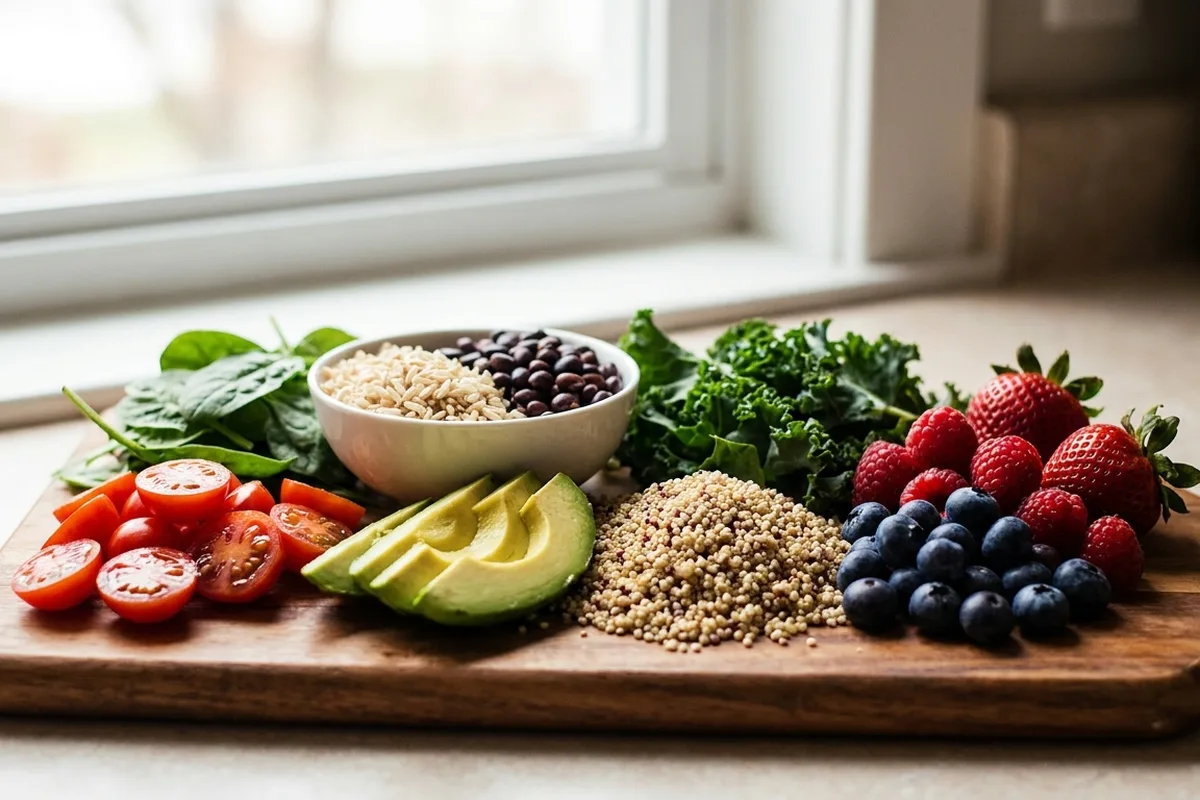
Honestly? A lot more than you’d think. When I was first staring at this diagnosis, it felt like everything good had been taken off the table. But here’s the truth that got me through those early weeks: most whole, single-ingredient foods are naturally gluten-free, no special label required. You don’t have to rebuild your whole kitchen around expensive specialty products.
According to the Mayo Clinic, these everyday food groups are naturally gluten-free:
- Fresh produce — every fruit and vegetable, in any color you can find.
- Plain meat, poultry, fish, and eggs — as long as they’re unbreaded and not marinated in soy sauce or coated seasonings.
- Most dairy — milk, plain yogurt, and cheese.
- Beans, legumes, nuts, and seeds — affordable, filling protein and fiber.
- Naturally gluten-free grains — rice, quinoa, corn, buckwheat, millet, sorghum, and certified gluten-free oats.
A quick word on oats: they’re naturally gluten-free, but the Celiac Disease Foundation notes they’re often processed on the same equipment as wheat, so always buy ones labeled gluten-free. In the U.S., that label legally means the food contains less than 20 parts per million of gluten under the FDA’s gluten-free labeling rule (21 CFR 101.91).
To build a balanced plate, I keep it simple: fill half with veggies and fruit, a quarter with protein, and a quarter with a gluten-free grain or starchy vegetable like potato. Easy to remember, and it works.
One thing worth knowing as a nurse and a mom: research suggests a gluten-free diet can run low in fiber, iron, and calcium, especially if it leans heavily on processed substitutes. The good news is that whole foods cover most of this for you — beans and leafy greens for iron, dairy and leafy greens for calcium, and intact grains and produce for fiber. The NIDDK recommends working with your doctor and a registered dietitian to make sure you’re getting everything you need. You’ve absolutely got this.
How to Read a Label with Confidence
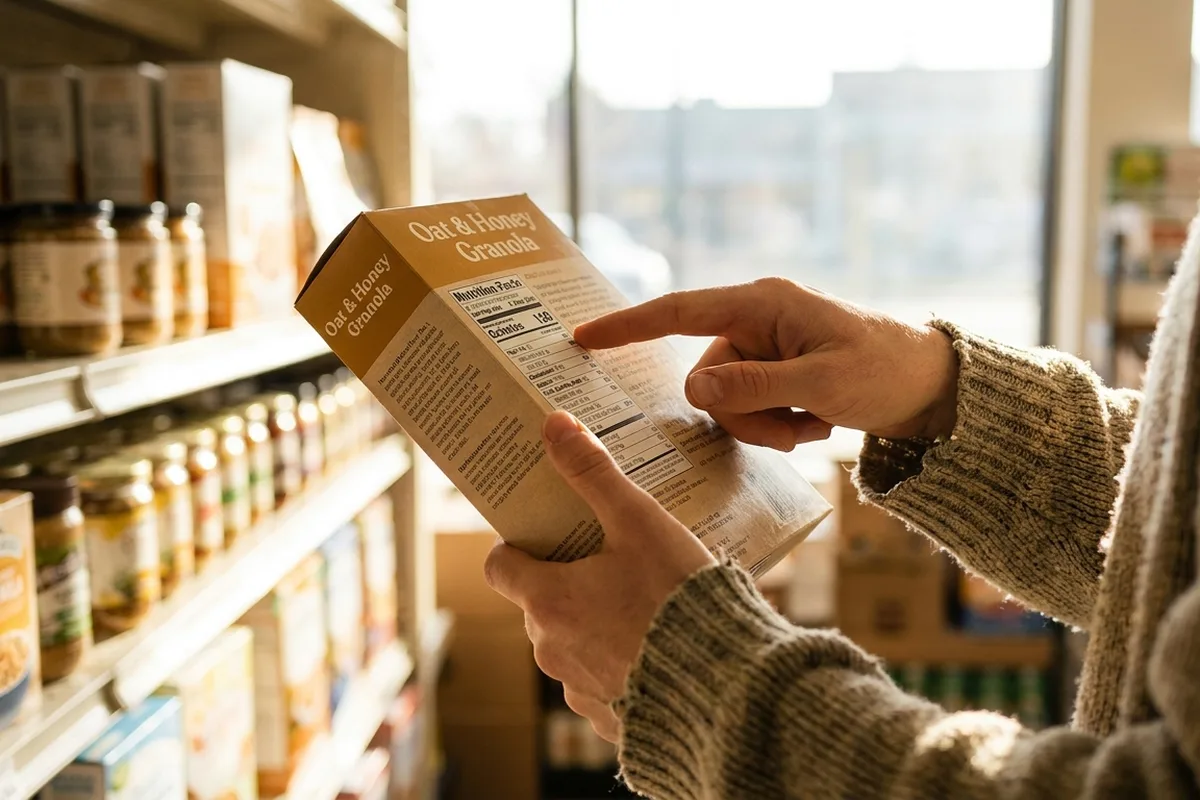
The fastest way to read a label with confidence is to trust the certified seal, then scan the ingredients yourself. When a package says “gluten-free,” the FDA legally requires it to contain under 20 parts per million (ppm) of gluten under its labeling rule, 21 CFR 101.91. That’s the lowest level reliably detectable with current testing, and research suggests most people with celiac disease tolerate trace amounts that small. I still read every label, but knowing that number takes a lot of the fear out of the grocery store.
If you want an extra layer of reassurance, look for the GFCO certification mark from the Gluten-Free Certification Organization, a program of the Gluten Intolerance Group. Their standard is 10 ppm, twice as strict as the FDA minimum. It’s not required for a food to be safe, but in our house it’s a nice green light, especially for my kids.
Then I do a quick ingredient scan. Watch for these words:
- Wheat (including dextrin or starch listed “wheat”)
- Barley and rye — these aren’t covered by U.S. allergen labeling, so they may hide in the ingredient list without a bold “Contains” warning
- Malt — malt flavor, malt extract, malt vinegar (malt comes from barley)
- Brewer’s yeast
The Celiac Disease Foundation keeps a handy list of ingredients to avoid if you want to print one for your wallet.
One more thing that trips people up: “may contain wheat” or “made in a facility that also processes wheat.” These advisory statements are voluntary and not required by law, and they have no uniform legal definition. The reassuring part is that a “gluten-free”-labeled product still has to meet the under-20-ppm rule even if it carries one of these warnings. When the wording feels unclear, contact the manufacturer, and talk with your doctor or dietitian about how cautious you personally need to be. You’ve got this.
Cross-Contamination: The Part People Miss
Here’s the part that surprises almost everyone after diagnosis: with celiac disease, it’s not just the slice of bread you avoid that matters. It’s the invisible crumbs left behind. Celiac is an immune reaction, so even trace amounts of gluten can trigger intestinal damage in sensitive people. That’s why the FDA’s gluten-free labeling rule (21 CFR 101.91) sets the bar at less than 20 parts per million — roughly the lowest amount tests can reliably detect.
Now take a breath, because the news is better than you’d think. A widely cited a peer-reviewed study on gluten transfer in common cooking activities found that some classic worries transfer less gluten than we feared. A few things still genuinely matter at home:
- Shared pasta water — this one’s real. The same study found gluten-free pasta cooked in used pasta water tested far above the safe limit. Always start fresh water.
- Flour dust — wheat flour can stay airborne and settle on surfaces well after baking. Bake gluten-containing items separately and wipe down after.
- The butter knife and jars — one swipe of a crumb-covered knife back into the butter, peanut butter, or jam contaminates the whole jar. Squeeze bottles or a dedicated jar solve this.
- Scratched colanders, wooden utensils, and old toasters — porous, grooved surfaces trap gluten that washing can’t fully reach. Dedicated gluten-free versions are the simplest fix.
Dining out is where vigilance pays off most. A shared deep fryer (think fries cooked alongside breaded foods) and shared pasta water are the big culprits, along with crumb-covered prep surfaces. It’s okay to ask the kitchen how they handle gluten-free orders — that’s not being difficult, it’s protecting your health.
You don’t need a sterile lab, just a few smart habits. Reactions and sensitivity vary from person to person, so talk to your doctor or a registered dietitian about what’s right for you. You’ve got this.
Your First Two Weeks, Step by Step
Take a breath. Your first two weeks gluten-free are about five calm, doable steps, not perfection. Here’s the order I’d give a newly-diagnosed friend, one thing at a time.
- Confirm your diagnosis with your doctor first. If you haven’t been formally tested yet, don’t go gluten-free until you have. The Celiac Disease Foundation notes that you must be on a gluten-containing diet for celiac blood testing to be accurate — quitting early can make results look normal even when they aren’t. Talk to your doctor about confirming the diagnosis before you change a thing.
- Clean and separate the kitchen. Once you’re cleared to go GF, wipe down counters and swap the gluten-sharing culprits: your toaster, wooden spoons, scratched nonstick pans, and the shared butter or peanut butter jar. A simple “GF shelf” goes a long way those first weeks.
- Restock with naturally gluten-free staples. The good news? So much of your cart is already safe. The Celiac Disease Foundation lists naturally gluten-free foods like plain rice, corn, potatoes, beans, fresh fruits and vegetables, eggs, plain meat, and fish. For packaged items, the FDA requires anything labeled “gluten-free” to contain less than 20 parts per million of gluten — and a GFCO certification mark means below 10 ppm.
- Master five easy go-to meals. Pick five meals built on those naturally-safe staples — think rice bowls, baked chicken and roasted veggies, eggs and potatoes, taco night with corn tortillas, a hearty bean soup. Repeating a few wins beats reinventing dinner every night while you’re learning.
- Find your people. You don’t have to do this alone. Lean on a trusted support community, your care team, and family for the emotional side too. This gets easier — I promise. You’ve got this.
Go Deeper into the Basics
Explore More of the Site
Frequently Asked Questions
These are the questions I hear most from newly-diagnosed friends. Quick, honest answers below — and as always, talk to your doctor about what’s right for you.
Is a gluten-free diet healthier for everyone?
No, not inherently. For people with celiac disease, non-celiac gluten sensitivity, or wheat allergy, going gluten-free is medically necessary — but for everyone else, research hasn’t shown that cutting gluten improves health or helps with weight loss. Gluten-free processed foods aren’t automatically healthier, so focus on whole foods either way. If gluten seems to bother you, talk to your doctor before changing anything.
What foods are naturally gluten-free?
A lot more than you’d think. According to the Celiac Disease Foundation, naturally gluten-free foods include all fresh fruits and vegetables, plain meat, poultry, fish, and eggs, most dairy, beans, legumes, nuts, and seeds, plus grains like rice, quinoa, corn, buckwheat, millet, sorghum, and certified gluten-free oats. Most of your cart is already safe.
Should I get tested for celiac disease before going gluten-free?
Yes — get tested first. As the Celiac Disease Foundation explains, celiac blood testing is only accurate while you’re still eating gluten. Quitting early lets your gut start healing, which can produce a false-negative result. If you’ve already stopped, getting an accurate answer usually means a miserable weeks-long gluten challenge — so confirm the diagnosis with your doctor before you cut anything out.
Are oats gluten-free?
Oats are naturally gluten-free, but they’re a common source of confusion. The Celiac Disease Foundation notes that oats are frequently grown, harvested, and milled alongside wheat, barley, and rye, so regular oats are often cross-contaminated. Always choose oats labeled gluten-free, which means they meet the under-20-ppm standard. A small number of people with celiac disease also react to oats themselves, so introduce them slowly and check with your doctor.
What does the 'gluten-free' label on a package legally mean?
In the U.S., any food labeled “gluten-free” must contain less than 20 parts per million (ppm) of gluten under the FDA’s gluten-free labeling rule (21 CFR 101.91). That’s roughly the lowest level current tests can reliably detect, and most people with celiac disease tolerate trace amounts that small. For an extra-strict layer, look for the GFCO certification mark, which sets its standard at 10 ppm.
What's the difference between celiac disease, gluten sensitivity, and wheat allergy?
They’re three distinct conditions. Celiac disease is an autoimmune disorder in which eating gluten damages the small intestine; the NIH’s NIDDK estimates about 1% of people worldwide have it, and the only treatment is a strict gluten-free diet for life. Non-celiac gluten sensitivity causes real symptoms that ease off gluten but with negative celiac tests. Wheat allergy is a classic allergic reaction to wheat proteins, diagnosed by an allergist. A proper diagnosis matters, so see your doctor.
Why does cross-contamination matter so much with celiac disease?
Because celiac is an immune reaction, even trace amounts of gluten — the invisible crumbs, not just the slice of bread you skip — can trigger intestinal damage. The biggest real-world culprits are shared pasta water, airborne flour dust, the crumb-covered butter knife dipped back into the jar, scratched colanders and old toasters, and shared restaurant deep fryers. The good news: a few dedicated tools and clean prep habits handle most of it. Sensitivity varies, so ask your doctor or dietitian what level of caution is right for you.
Can a gluten-free diet leave me short on nutrients?
It can if it leans heavily on processed substitutes. Research suggests a gluten-free diet can run low in fiber, iron, and calcium. The fix is mostly whole foods — beans and leafy greens for iron, dairy and leafy greens for calcium, and intact grains and produce for fiber. The NIDDK recommends working with your doctor and a registered dietitian to make sure you’re getting everything you need.
Medically reviewed and last updated 2026-06-01.