

On this page
There’s a moment at the register that every gluten-free family knows. The total pops up higher than you planned, and you start mentally sorting the cart into “we needed that” and “why did I buy that.”
It’s easy to leave that moment convinced that eating gluten-free on a real budget isn’t possible. So I set myself a $100 gluten-free grocery challenge: build one cart for our family of four, price every item fairly, and do the math on how far it goes.
The worry is real. In a U.S. price study published in the journal Nutrients, specialty gluten-free products cost 183% more than their wheat-based versions. But that markup sits on the foods made to replace wheat, and this challenge goes straight around them.
I’m a registered nurse, and I’ve been feeding a gluten-free household for years, so I wanted numbers I’d trust myself. Below are the cart line by line, the week of meals it makes, how far it stretches, and the few things I’d never cut to make the math work.
Key Takeaways
- $100 covers about six days for a family of four. At August 2026 U.S. average prices, a $100 cart of naturally gluten-free staples holds a little over 50,000 calories. That’s roughly six days of food for four people, or about 12 days for two.
- Being gluten-free added nothing to this cart. Every item is naturally gluten-free, so it costs exactly what it would cost any family. The gluten-free markup lives on specialty replacements like bread, pasta, and crackers.
- Protein per dollar decides what makes the cut. A dollar of dried beans buys about 60 grams of protein, and a dollar of ground beef buys about 11. That’s why there’s no ground beef in this cart.
- Seven full days takes sales and planned leftovers. Paying an advertised bag price for potatoes and moving the savings into rice pushes the math just past a week, and every dinner in the plan sets up the next day’s meal.
- Cheap never means skipping the label. Plain chicken with nothing added, sealed packages instead of bulk bins, and a quick look at anything seasoned still apply when money is tight.
My Rules for the $100 Gluten-Free Grocery Challenge
A challenge only teaches you something if the rules are fair, so these are mine, with the reason behind each.
The Rules
- $100 for one shopping trip, before any sales tax
- It has to feed four people: Paul, me, and our two boys
- Oil, salt, pepper, and a few spices count as already in the pantry
- No specialty gluten-free products: no bread, pasta, crackers, or snacks
- Every price is a national average, not my store’s best sale
- Every safety habit from a normal week still applies
The pantry rule is the one I’d question if I were reading this. Oil and spices aren’t free, but most kitchens already have them, and I’d rather say so up front than pretend they’re in the total.
The no-specialty rule is the point of the exercise. Our family keeps a gluten-free loaf we love, but the specialty aisle is where a gluten-free budget disappears, and I wanted to see what naturally gluten-free food can do on its own.
For prices, I skipped my own store’s sale flyer. I used the average retail prices the Bureau of Labor Statistics publishes from monthly price checks in 75 urban areas, plus USDA’s weekly survey of grocery ads for a few produce items BLS no longer tracks. A great sale week would have made the numbers prettier and helped fewer of you.
What $100 Buys: My Gluten-Free Cart, Line by Line
The full cart comes to $99.46, and every item on it is gluten-free by nature.
| Item | How much | Price | What it’s for |
|---|---|---|---|
| Chicken legs, bone-in | 10 lb | $16.70 | Three dinners, plus bones for broth |
| Eggs, large | 5 dozen | $11.36 | Breakfasts, fried rice, one dinner |
| Long-grain white rice | 10 lb | $11.11 | The calorie workhorse |
| Potatoes | 10 lb | $9.76 | Sheet pans, baked potatoes, breakfasts |
| Whole milk | 2 gallons | $8.46 | Drinks and breakfast rice |
| Dried beans, black and pinto | 4 lb | $6.52 | Bowls, baked-potato topping, chili |
| Cheddar cheese | 1 lb | $5.98 | On nearly everything |
| Butter | 1 lb | $4.02 | Cooking and pancakes |
| Broccoli crowns* | 2 lb | $4.02 | Fried rice and baked potatoes |
| Tomatoes | 2 lb | $3.95 | Bowls and chili |
| Carrots* | Two 2-lb bags | $3.88 | Sheet pan, soup, slaw, snacks |
| Bananas | 5 lb | $3.26 | Pancakes and snacks |
| Yellow onions* | 3-lb bag | $3.14 | The flavor base for every dinner |
| Apples* | 3-lb bag | $2.71 | Lunchbox fruit |
| Canned corn | Two 15.25-oz cans | $2.43 | Bowls and chili |
| Green cabbage* | One head, about 3 lb | $2.16 | Slaw and soup |
| Total | $99.46 | About six days of food for four |
Prices are U.S. city averages for August 2026 from the Bureau of Labor Statistics. Items marked * use USDA’s national average advertised price for the week of September 25, 2026, because BLS no longer tracks them. Your store will be different; the shape of the cart is what carries over.
Notice what’s missing: bread, pasta, crackers, and cereal, the foods where the gluten-free markup lives. Rice costs a gluten-free family the same as it costs anyone else, which is why this cart looks more like an old-fashioned grocery list than a gluten-free one.
Why There’s No Ground Beef in This Cart
When every dollar has to count, I stop comparing price per pound and start comparing protein per dollar. This is what one dollar bought at August 2026 average prices, using USDA nutrient data for the part you eat.
| Food | Average price | Protein per $1 |
|---|---|---|
| Dried beans | $1.63/lb | About 60 g |
| Eggs | $2.27/dozen | About 33 g |
| Chicken legs, bone-in | $1.67/lb | About 32 g |
| Whole milk | $4.23/gallon | About 29 g |
| Boneless chicken breast | $4.17/lb | About 24 g |
| Cheddar cheese | $5.98/lb | About 17 g |
| Ground beef | $7.16/lb | About 11 g |
Ground beef averaged $7.16 a pound in August 2026, and a dollar of it buys less than a fifth of the protein in a dollar of dried beans. Beans, eggs, and bone-in chicken legs do the same job for far less, so they carry this cart.
What the $100 Cart Cooks: A Week of Meals
A cheap week works when every dinner sets up the next meal. This is how I’d turn the cart into seven dinners, with breakfasts and lunches built from the same ingredients.
| Night | Dinner | What it sets up |
|---|---|---|
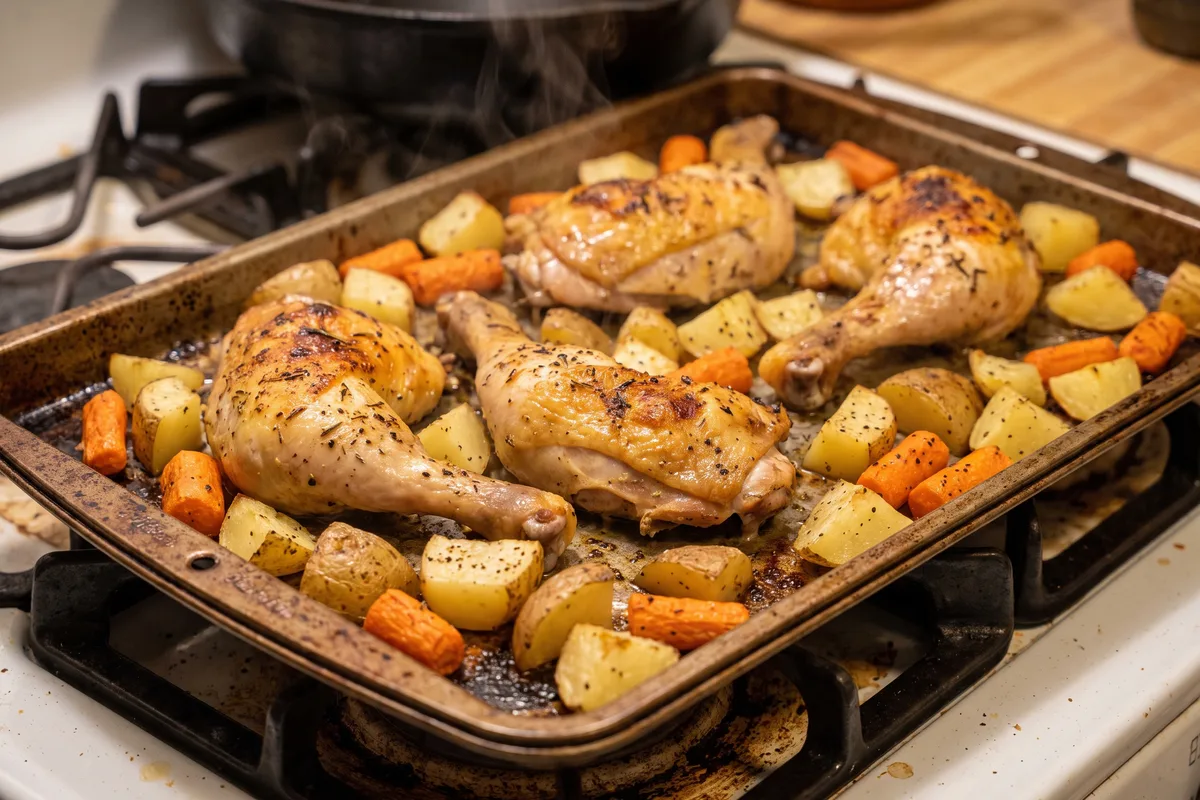
| 1 | Sheet-pan chicken legs with potatoes and carrots | Extra chicken for night 3, bones for broth |
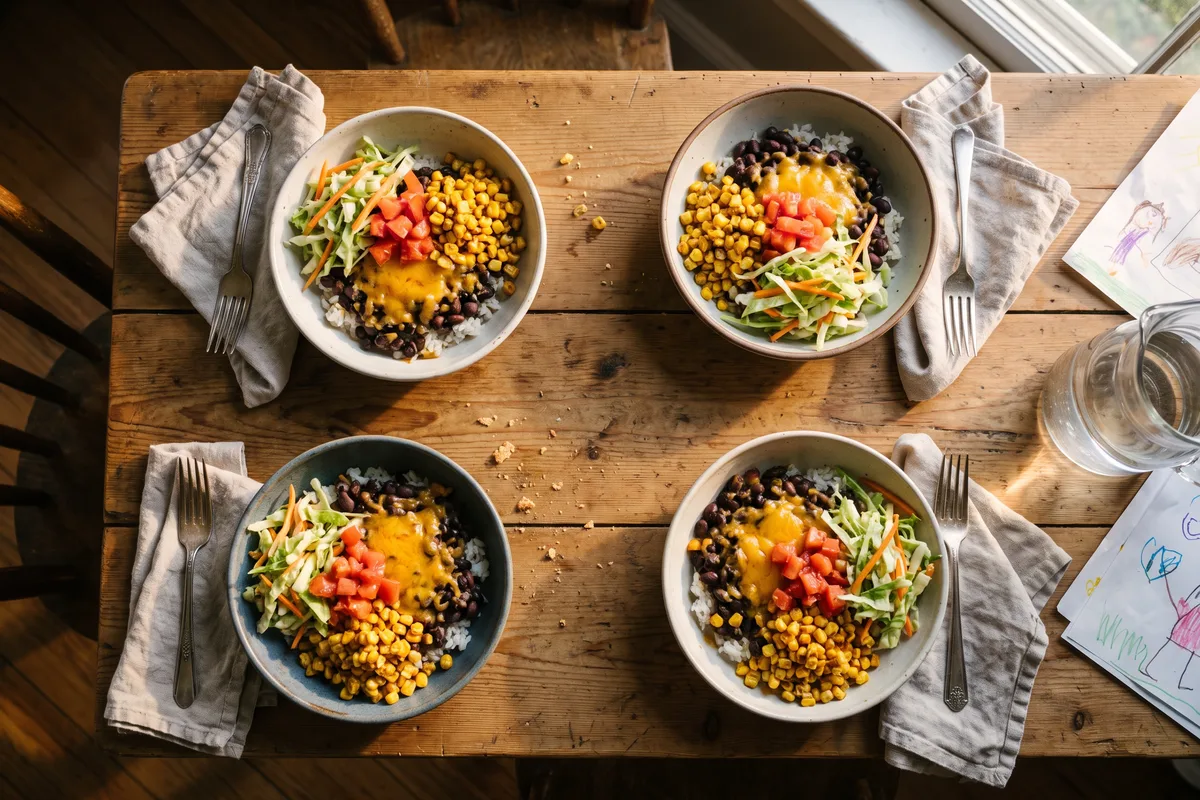
| 2 | Black bean and rice bowls with cheese, corn, tomatoes, and cabbage slaw | Rice and beans for lunches |
| 3 | Chicken fried rice with eggs, carrots, onions, and broccoli | Uses the day-old rice |
| 4 | Baked potatoes loaded with pinto beans, cheese, and broccoli | Beans for night 6 |
| 5 | Chicken and rice soup from the rest of the chicken legs, with carrots, onions, and cabbage | Soup for lunch |
| 6 | Two-bean chili with tomatoes, onions, and corn over rice | Chili for lunch |
| 7 | Breakfast for dinner: a potato and egg skillet with cheese | Uses the last potatoes |
Breakfasts rotate between scrambled eggs with pan-fried potatoes, banana-egg pancakes, and rice simmered in milk with cinnamon and sliced banana. Lunches are whatever last night made extra of, plus cabbage-carrot slaw and fruit.
The chicken legs for night five go straight into the freezer on shopping day, so nothing sits in the fridge waiting its turn.
None of this is fancy, on purpose. For more ideas in the same spirit, these gluten-free meals under $5 a serving use the same handful of staples.
So How Far Does $100 Stretch? I Did the Math
For our family of four: about six days.
By USDA nutrient data, the cart holds a little over 50,000 calories. Nutrition Facts labels use 2,000 calories a day as a general guide, so I used that for each of us: 8,000 calories a day for four people.
| Who’s eating | Calories a day | How long the cart lasts |
|---|---|---|
| One adult | 2,000 | About 25 days, if nothing spoils first |
| Two adults | 4,000 | About 12 days |
| Family of four | 8,000 | About 6 days |
Real needs vary with age, size, and activity, so treat those as ballparks. Two boys in sports can blow right past a yardstick.
Protein wasn’t the weak spot. The cart holds about 2,150 grams, more than ten days’ worth at the 50-gram Daily Value on nutrition labels for all four of us. Calories ran out first, which tells you where a tight budget pinches.
As a nurse, I can’t stop at the calorie count. About a third of this cart’s calories come from rice, and the produce is real but not very varied. It’s a filling, safe week, and I wouldn’t hand it to a family as a plan for months.
For comparison, the USDA’s Thrifty Food Plan, which the agency describes as “a nutritious, practical, cost-effective diet,” cost $236.30 a week for a family of four in August 2026. Our cart is 42% of that, and that gap is the distance between getting through one week and a budget you can live on.
If $100 is your real weekly budget and not a challenge, you’re not failing at anything. SNAP benefits can be used for any food for the household, and gluten-free food counts like any other.
How I’d Stretch It to a Full Seven Days
Six days isn’t seven. These five moves close the gap without cutting what matters.
- Shop the ad for the heavy stuff. In USDA’s survey of grocery ads for the last week of September 2026, 10-pound bags of russet potatoes were advertised at an average of $3.92. At the average per-pound price, 10 pounds costs $9.76. Moving that $5.84 into five more pounds of rice pushes the math a little past seven days.
- Plan the leftover before you cook the dinner. Every dinner in the plan above makes the next meal easier. In our house, planned leftovers get eaten and surprise leftovers get forgotten in the back of the fridge.
- Freeze things before they turn. Browning bananas go into the freezer for pancakes, and cooked beans and rice freeze flat in meal-size bags. My gluten-free freezer stash works the same way, and it’s what keeps a tired Thursday from turning into takeout.
- Buy the bone. Bone-in chicken legs averaged $1.67 a pound in August 2026, and boneless breast averaged $4.17. The bones are also your soup.
- Stop at seven. Past a week, you’re not stretching food anymore; you’re cutting nutrition. As a nurse, that’s my line, especially with growing kids at the table.
The Gluten-Free Products I’d Add First If the Budget Allows
With more than $100 to work with, these are the specialty products I’d add first. Each one turns the staples in this cart into a different dinner, and that variety keeps a budget week from feeling like a punishment.
If I could add just one thing to this cart, it would be a box of this. Night six’s chili spooned over spaghetti instead of rice feels like a brand-new dinner. It’s made from corn and rice, labeled gluten-free, and produced on a dedicated gluten-free line, and in that price study, gluten-free versions from mainstream brands carried a smaller markup than the overall average. View on Amazon
This bottle is the difference between rice with eggs and a fried rice that tastes like takeout. Regular soy sauce is usually brewed with wheat; San-J’s tamari is made with 100% soy and no wheat, and it’s verified by the Gluten-Free Certification Organization. A little goes a long way. View on Amazon
With the eggs, milk, butter, and browning bananas already in this cart, a bag of this means pancakes and muffins from scratch instead of the bakery aisle. Bob’s Red Mill tests it in a 100% dedicated gluten-free facility. It swaps cup for cup in non-yeast recipes, so it isn’t meant for sandwich bread. View on Amazon
My splurge, and the first thing I’d buy back. A sandwich turns leftover chicken or a fried egg into a packable lunch. Canyon Bakehouse is certified gluten-free through the Gluten-Free Certification Organization and bakes in a dedicated gluten-free bakery. Keep the loaf in the freezer and pull slices as you need them. View on Amazon
As an Amazon Associate I earn from qualifying purchases.
The rest of what I’m recommending this month lives on Katie’s Picks.
Two Things I’d Skip, Even With Money Left Over
- Boxed rice and pasta side mixes. Many of them blend the rice with wheat pasta like orzo or vermicelli, so they aren’t gluten-free at all. Even a gluten-free one is mostly a seasoning packet you can make from your own spice rack.
- Chicken packed with added solution. Some raw chicken is sold with added broth or salt water, and USDA labeling rules require the package to say so, with the percentage. That liquid counts toward the weight you pay for, and it makes the ingredient list longer than just chicken. My rule is simple: the label lists the meat and nothing else.
Where a Tight Gluten-Free Grocery Budget Goes Wrong
- Replacing everything instead of rethinking the plate. Buying a gluten-free version of every wheat food is the fastest way through a budget, because the gluten-free price gap sits almost entirely on those specialty products. Build meals that never needed wheat in the first place.
- Saving money on the risky stuff. Bulk-bin grains and regular oats can look like bargains. The Celiac Disease Foundation recommends against buying grains from bulk bins because of possible cross-contact, and oats need a gluten-free label every time.
- Skipping the pick-through on dried beans. Beans and lentils can share fields and equipment with wheat and barley. In a study of store-bought lentils, 2 of 25 bags held a stray wheat or barley grain, and the researchers calculated that one grain can push a 1-pound bag past the 20 ppm gluten-free limit. Pour dried beans onto a sheet pan, pick out anything that isn’t a bean, and rinse before cooking.
- Cutting protein to make the numbers work. Kids who are starving by 3 p.m. are how a budget week ends at a drive-through, and that’s the last place a gluten-free family wants to improvise. Eggs, beans, and bone-in chicken keep protein cheap.
- Buying more produce than you’ll eat. A bag of carrots is only a bargain if you finish it. Give every vegetable in the cart a job in a specific meal, and lean on sturdy ones like cabbage, carrots, and onions.
- Assuming “plain” means safe. Seasoned potatoes, marinated meat, vegetables in sauce, and flavored rice all need a label check, even in a cheap cart.
Frequently Asked Questions
Can you eat gluten-free on $100 a week?
For one or two people, yes. For a family of four, almost: at August 2026 U.S. average prices, $100 of naturally gluten-free staples holds a little over 50,000 calories, about six days of food for four people at 2,000 calories each. Stretching it to a full week takes sale prices and planned leftovers.
What are the cheapest gluten-free foods?
Naturally gluten-free staples are the cheapest by far. In August 2026, U.S. average prices were about $1.11 a pound for long-grain white rice, $0.98 for white potatoes, $1.63 for dried beans, $0.65 for bananas, and $2.27 for a dozen eggs. Cabbage, carrots, and onions are inexpensive too, especially on sale.
Why is gluten-free food so expensive?
Specialty gluten-free products are the expensive part. A U.S. price study found them 183% more expensive than their wheat-based versions overall, with bread, pasta, and crackers even higher. Naturally gluten-free foods like rice, potatoes, beans, and eggs don’t carry that markup.
Can you buy gluten-free food with SNAP?
Yes. The USDA’s list of what SNAP can buy starts with any food for the household, and gluten-free foods aren’t treated any differently. Hot foods, vitamins and supplements, and nonfood items are not eligible.
Are plain rice and dried beans gluten-free?
Plain rice and plain dried beans are naturally gluten-free. The risk comes from what gets added or shared: flavored rice mixes can contain wheat, dried beans and lentils can carry a stray wheat or barley grain, and the Celiac Disease Foundation recommends against buying grains from bulk bins. Buy sealed packages, pick through dried beans before rinsing, and read the label on anything seasoned.
Six Days, $100, and Not One Specialty Product
What stuck with me most was how little of a gluten-free cart has to carry a gluten-free label. Rice, beans, potatoes, eggs, and chicken did nearly all the work, and none of them costs a gluten-free family a cent more than anyone else.
If you try your own gluten-free grocery challenge, start small. Build three dinners this week from naturally gluten-free staples before you add a single specialty product, and watch what happens to your total.
Get the 4-Week GF Meal Plan
Twenty weeknight dinners with a store-sorted grocery list for every week, so you shop a budget week with a plan instead of a hunch. Free, as a printable PDF.
Gluten-free on a budget will never feel effortless, but it’s a lot more doable than that number on the register makes it feel.