

THE COSTCO GUIDE
Gluten-free
shopping at Costco.
A plan for the warehouse: Kirkland labels, bulk math, samples, the food court and delivery.
Explore the aisles Not a member yet? Start hereBy Let’s Go Gluten Free · Independent of Costco.
Sources checked · Sources & approach
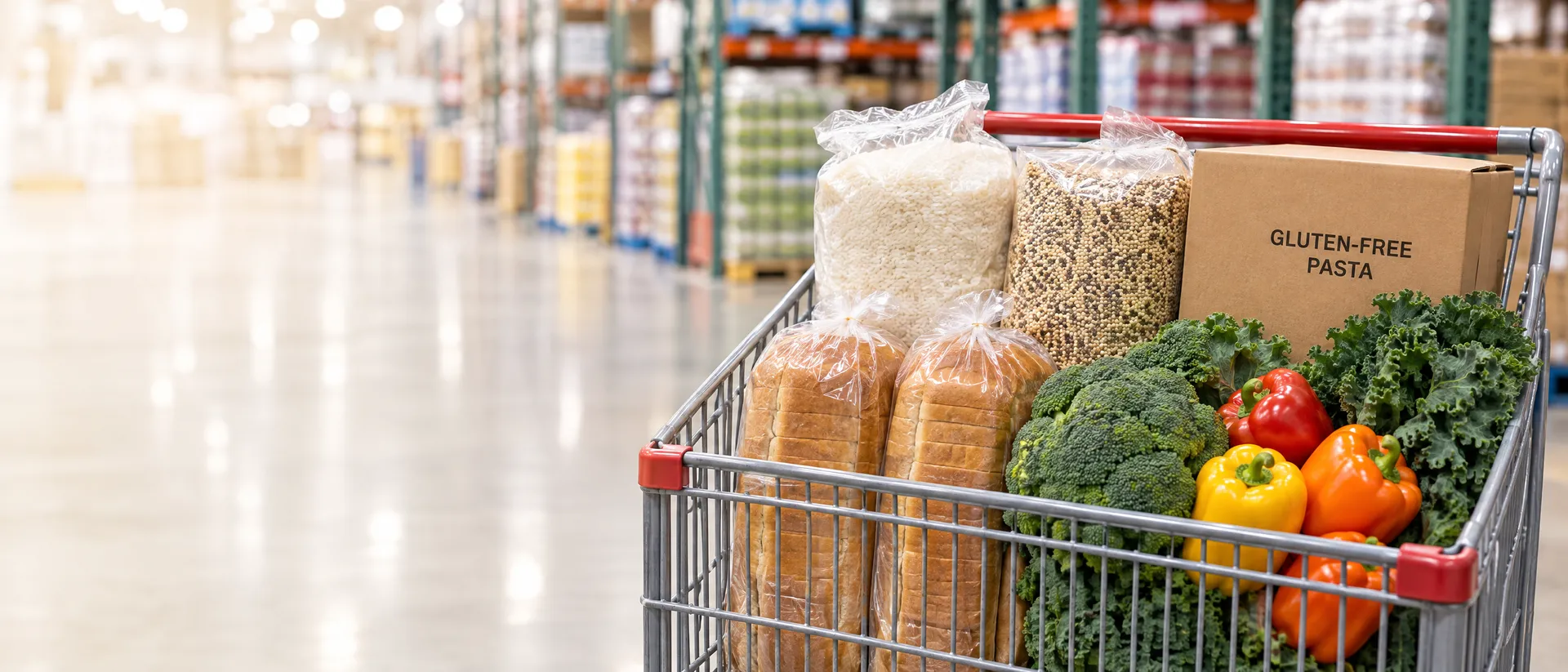
What’s going in the cart?
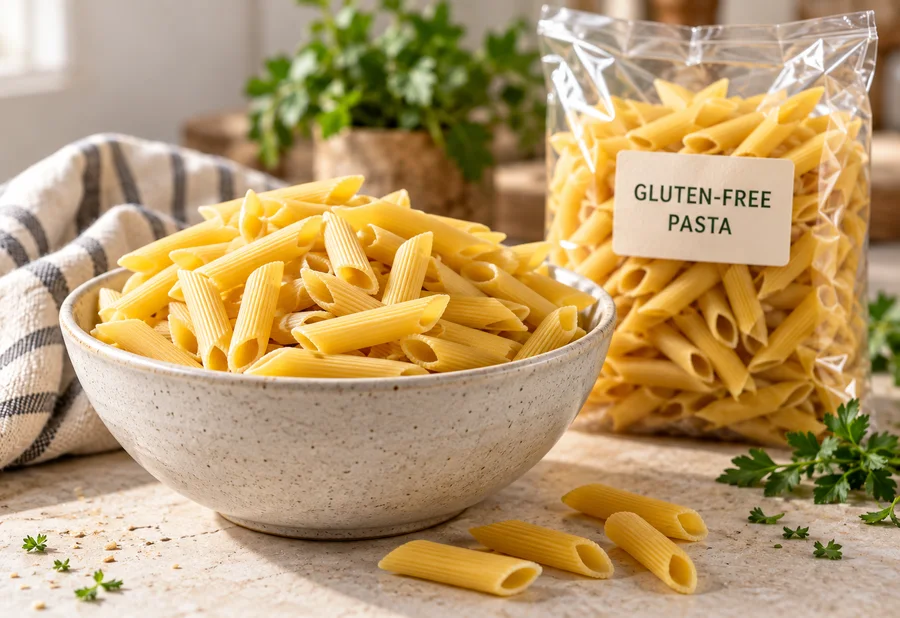
Pasta & noodles
A six-pack is a commitment. Start with a shape you already cook.
See pasta checklist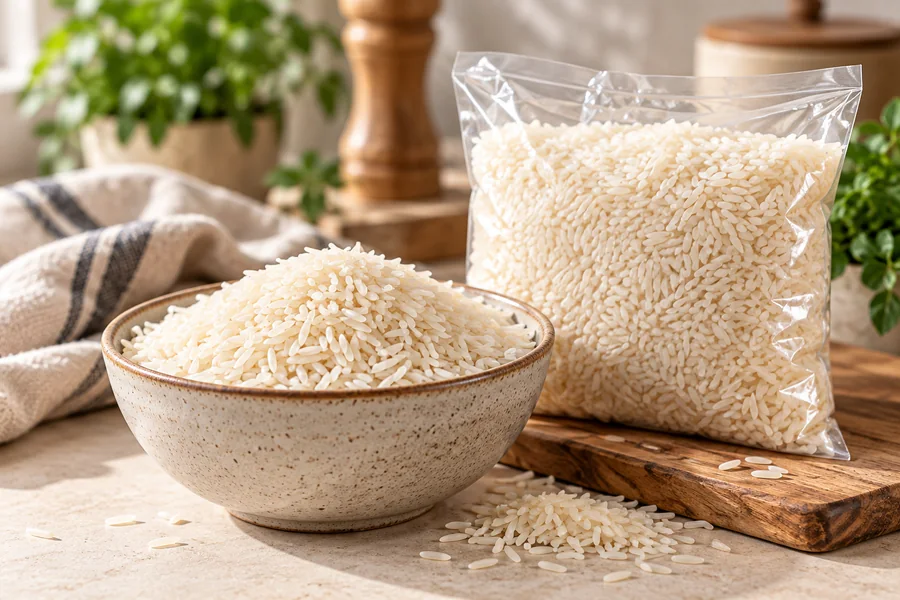
Rice, quinoa & grains
Big bags are where the label matters most.
See rice checklist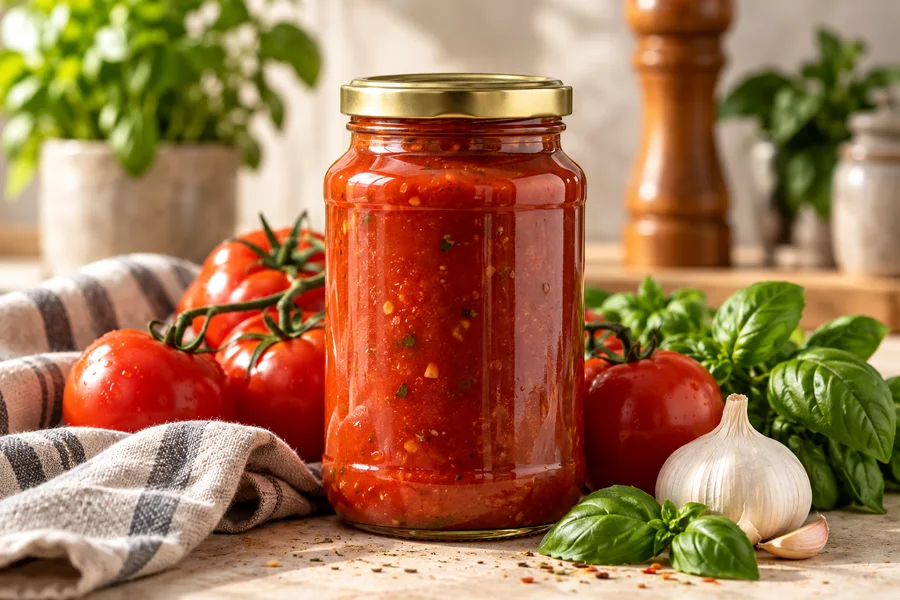
Sauces, broths & seasonings
Twin packs and jugs. Read once, use for months.
See sauce checklist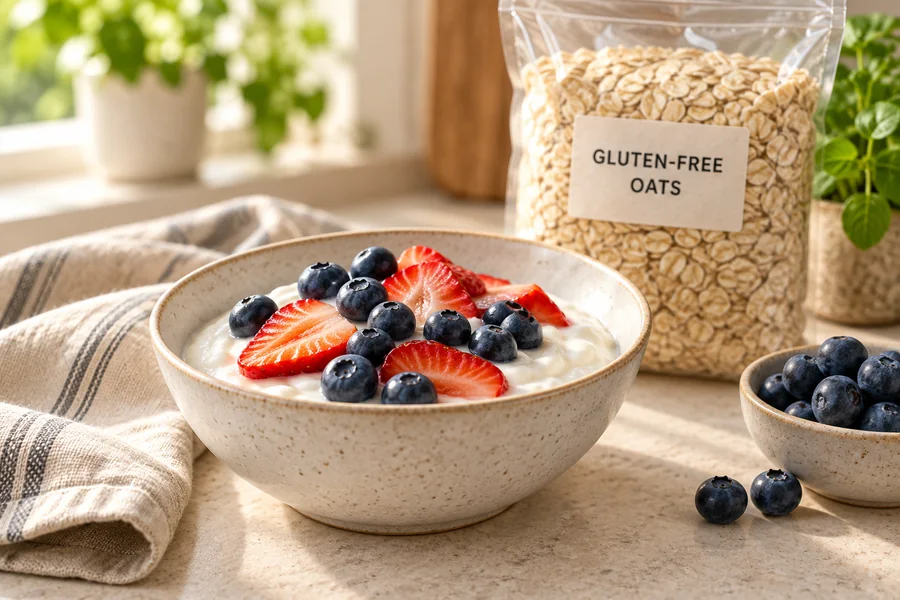
Breakfast, baking & flours
Nut flours, oats and mixes by the kilo.
See breakfast checklist
Snacks, nuts & bars
Variety boxes mix flavors, and sometimes answers.
See snacks checklist
Frozen meals, bread & pizza
Gluten-free bread usually comes in twos.
See frozen checklist
Produce, meat & dairy
Whole foods in bulk are the easy wins.
See fresh checklistNo matching aisle or help section. Try “Kirkland,” “samples” or “freezer.”
Aisle ideas, not a live Costco inventory. Images are AI-generated illustrations, not product or warehouse-visit photos.
Your Costco run, organized.
Exact items, pack sizes and a plan for each. One list in this browser.
FEWER PRODUCTS, BIGGER PACKS
A warehouse rewards
a plan.
Costco stocks fewer than 4,000 items in a warehouse, a fraction of a supermarket’s range, and sells them in large packs. For a gluten-free kitchen that cuts both ways. Staples can cost less per ounce, and a wrong guess is a big one.
So this guide is less about which products to buy and more about how to buy them: reading the labels Costco actually uses, doing the bulk math, and knowing which parts of the building to walk past.
Looking for product ideas? See our Costco picks01 / GETTING IN THE DOOR
Pick how you’ll shop,
then shop that way.
Costco is a membership club, and the price, the selection and the label-reading all change with how you buy. A Gold Star membership costs $65 a year and Executive costs $130, fees that have applied since September 2024. Executive adds a 2% annual reward on qualifying purchases, capped at $1,250.
Source: Costco’s membership fee notice. Check the current fee when you join or renew.
MAKE THIS GUIDE YOURS
How will you shop Costco?
You shop in the warehouse.
This is where prices are lowest and where you can read every label yourself. Before you drive, check your warehouse in the Costco app. It shows price and availability, on a delay of up to 30 minutes, and leaves out anything that's out of stock.
Your choice is remembered in this browser only.
- Check your warehouse first. The Costco app can show a specific warehouse’s price and availability for an item. Costco says the data runs up to 30 minutes behind and leaves out anything that’s sold out.
- Search online with the filter. Costco.com’s grocery categories include a Gluten Free option under dietary features. Use it to find candidates, not to settle the question.
- Write down the item number. The number on the price sign identifies the exact product and size, which helps when a brand sells several look-alike packs.
- Read the package in the aisle. The label on the pallet in front of you is the current one. Listings and photos online can lag behind it.
Not sure a membership is worth it for you? The bulk math section has a calculator for that, and Costco says it will refund the fee at any time if you’re dissatisfied.
02 / WHAT THE SHELF TELLS YOU
Kirkland Signature is a brand,
not a gluten-free promise.
Kirkland Signature is Costco’s own brand, and it’s on everything from olive oil to almond flour. Some Kirkland products say gluten-free on the package and many don’t. We couldn’t find a published Costco policy on how the brand handles gluten-free claims, so each package stands on its own.
In practice you’ll meet three kinds of label, on Kirkland and on every other brand in the building.
SAYS GLUTEN-FREE
The claim is the standard
On an FDA-regulated food, those words mean under 20 parts per million of gluten. A separate certification seal is a bonus, not a requirement.
NO CLAIM AT ALL
Ingredients only go so far
A clean ingredient list says nothing about shared fields or equipment. It matters most for grains, flours, oats, lentils and nuts.
“MAY CONTAIN WHEAT”
A voluntary line
Makers choose whether to print it, so its absence isn’t reassurance. On a product that’s labeled gluten-free, the under-20-ppm rule still applies.
That last point surprises people. In a 2016 study of 101 products that weren’t labeled gluten-free but listed no gluten ingredients, a “may contain” statement didn’t predict which ones had measurable gluten: 4 of the 87 products with no warning at all tested at or above 20 ppm. The practical rule for big bags of nuts, oats and grains is to look for the gluten-free claim itself.
Why your favorite just vanished
With so few items per warehouse, Costco rotates stock often, and what’s on the floor differs from one warehouse to the next. Costco’s own tip: an asterisk in the top corner of a price sign “typically means the item is not going to be replenished once it is sold through.” If a gluten-free staple you rely on shows one, buy what you can store and start looking for its replacement.
Source: Costco’s membership tips.
Want to know what’s in our own cart? Katie’s Picks lists the gluten-free products our family buys, updated monthly, and Costco vs. Aldi compares the two for a gluten-free budget.
03 / FEWER ITEMS, EACH ONE BIGGER
Your aisle-by-aisle checklist.
Open an aisle for what to watch and a starting list item. Add the brand, the pack size and what you’ll do with all of it before you save. At Costco the plan for the second half of the bag belongs on the list too.
Pasta & noodles
Gluten-free pasta at Costco tends to come as a multi-pack from a single brand, and the brand on the pallet can change between visits. Make sure the whole case is the shape and grain blend you want before it goes in the cart.
- Read the outer wrap and one inner box. Variety packs can mix recipes.
- Run the bulk math below. A multi-pack only saves money if you cook all of it.
- Trying a new brand? Costco's return policy takes some of the risk out of a big pack.
Rice, quinoa & grains
Large bags of rice, quinoa, lentils and oats are classic warehouse buys, and grains are also the foods most likely to pick up gluten before they're packed. A gluten-free claim on the bag counts for more in this aisle than almost anywhere else.
- Choose bags that say gluten-free, especially quinoa, lentils, oats and flours.
- With no claim on the bag, look for a labeled option before settling for it.
- Plan the storage first, with an airtight container and a use for the second half.
Sauces, broths & seasonings
Soy sauce, teriyaki, marinades, gravy and soup bases are common homes for wheat, and at warehouse sizes one wrong bottle is a lot of wrong bottle. Tamari, or a soy sauce labeled gluten-free, is the swap to look for.
- Read broths, bouillon and stock concentrates for wheat, barley and malt.
- Large shakers of seasoning blends and rubs need the same read as a sauce.
- Note the flavor on your list. The next visit may stock a different one.
Breakfast, baking & flours
Costco sells baking staples in sizes that suit a gluten-free kitchen, such as nut flours, oats and pancake mixes. Oats should carry a gluten-free label. Nut and whole-grain flours keep their quality longer in the fridge or freezer once opened.
- Read granola and cereal flavor by flavor, and look for gluten-free oats.
- No gluten-free claim on a flour or oat product? Find one that has it, whatever the “may contain” line says.
- Split a big bag into smaller containers so only one is open at a time.
Snacks, nuts & bars
Big boxes of bars, chips and crackers often bundle several flavors, and one flavor can differ from the rest. Nuts and trail mixes are frequently packed on shared equipment, and many say so on the bag.
- Check every flavor listed on a variety box, not only the front panel.
- For nuts and dried fruit, a gluten-free claim tells you more than a “may contain” line does, present or absent.
- Seasoned nuts and snack mixes can include wheat-based soy sauce or malt.
Frozen meals, bread & pizza
When a warehouse carries gluten-free bread, it's often a two-loaf pack, sometimes near the bakery and sometimes frozen. Freeze the second loaf the day you get home. The freezer aisles also hold meals, pizzas and breaded items that each need a full read.
- Meals with meat or poultry follow USDA labeling. Read the whole ingredient list.
- Treat breaded and battered items as gluten-free only when the package says so.
- Measure your freezer space before you buy by the case.
Produce, meat & dairy
Plain produce, eggs, butter, plain cheese and plain cuts of meat are the simplest part of a Costco trip, and the sizes suit batch cooking. The labels to read are on anything seasoned, marinated, stuffed or sauced.
- Marinated meats and ready-to-cook meals carry full ingredient labels. Use them.
- Shredded cheese and large produce packs keep on a schedule. See the storage chart.
- Plan two meals for any large pack of fresh food before it goes in the cart.
04 / BEYOND THE AISLES
Know the warehouse,
corner by corner.
Most of a Costco is sealed packages on pallets, which suits label readers. The exceptions are the places where food is served, sampled or made: the demo stations, the food court, the bakery and the deli cases. Pick an area to see how we’d handle it.
SAMPLE STATIONS
Read firstA sample is food with no label in your hand.
A demo station can heat and cut several products in a day on the same trays, small ovens and tongs, and the person serving isn’t the manufacturer. We found no celiac-specific guidance on store samples, so we apply a general rule from USDA’s food safety service: when a food has no ingredient label, the safest choice is not to eat it.
Ask at the station
“Could I see the package this came from? Was anything else heated on this tray today?”
What to do
- Ask to see the box, and run the package check on it before you taste anything.
- Skip samples heated on a shared tray or toaster oven, even when the product is labeled gluten-free.
- Like the look of it? Buy the sealed package and try it at home instead.
FOOD COURT
Usually skipPizza ovens, wheat buns and no published allergen list.
The food court bakes pizza and serves hot dogs on wheat buns from one small kitchen. Beyond Celiac names pizzerias among the most common places for cross-contact and notes that flour can stay airborne for 12 to 24 hours, depending on ventilation.
We couldn’t find a current ingredient or allergen list for the U.S. food court on Costco’s website, and its old nutrition help page has been retired. Without one, there’s nothing to check a claim against.
What to do
- Eat before you shop, or bring a snack you've already checked.
- Ordering an item without the bun doesn't take it out of a shared kitchen.
- If you ask anyway, ask to see the packaging for the exact item. Staff can't vouch for the equipment.
BAKERY
Usually skipBread, muffins and cakes made with wheat flour.
The bakery department’s own breads, muffins, cakes and pies are wheat-based. Where baking happens on site, loose flour is part of the room, and Beyond Celiac notes it can hang in the air for hours.
Sealed gluten-free bread from outside brands is a separate product, often shelved nearby or in the freezer aisle. Read it like any other package.
What to do
- Skip the bakery department's own items, including anything decorated to order.
- Look for sealed, gluten-free-labeled bread and desserts instead.
- For a celebration cake, order from a dedicated gluten-free bakery or bake at home.
DELI & READY MEALS
Read firstPacked and labeled before it reaches the case.
Costco’s prepared foods are generally sold sealed and labeled: meal kits, salads, dips, sliced meats and take-and-bake dishes. That helps, because the full ingredient list is on the tray.
Ready meals often include sauces, pasta, croutons or breading. Read for wheat, barley, rye and malt, and on anything made with meat, for starch or dextrin with no source named.
What to do
- Read the ingredient label on the exact tray, every visit. Recipes change.
- A dish with no gluten ingredients may still have been assembled where wheat dishes are made. Decide with that in mind.
- Check the use-by date against when you'll actually eat it.
ROTISSERIE CHICKEN
Read firstPopular, and worth thirty seconds with the label.
Plenty of websites say Costco’s rotisserie chicken is labeled gluten-free. We couldn’t confirm that from Costco’s own pages, and labels change, so go by the one on the chicken in your hands.
Chicken is labeled under USDA rules. Every ingredient has to be listed, but a “contains wheat” statement is voluntary, seasonings can appear simply as flavors or spices, and modified starch doesn’t have to name its source.
What to do
- Look for a gluten-free statement on the label and for wheat, barley, rye or malt in the ingredients.
- No statement, or an unnamed starch or dextrin? Treat it as unanswered, and ask the company before relying on it.
- Refrigerate it within 2 hours and eat it within 3 to 4 days, or freeze the meat.
MEAT & SEAFOOD
Lower riskPlain cuts in big trays.
Plain beef, pork, poultry and fish are naturally gluten-free and sold sealed. The exceptions share the same cases: marinated and seasoned cuts, stuffed or breaded items, sausages and meatballs.
What to do
- Buy plain cuts and season them at home.
- Read the full ingredient list on anything marinated, seasoned, stuffed or breaded.
- Portion a large tray into meal-size packs and freeze what you won't cook this week.
PRODUCE & DAIRY COOLER
Lower riskThe simplest part of the warehouse.
Whole fruit and vegetables, eggs, butter, milk and plain cheese are naturally gluten-free. Labels come back into play with salad kits, dips, flavored yogurt and anything with a topping or a sauce packet.
What to do
- Build the week's meals around what you buy here.
- Treat salad kits as packaged food. The croutons and dressing decide the answer.
- Buy the big pack only when you have a plan to use or freeze it.
VITAMINS & PHARMACY
Read firstSupplements fall under the gluten-free rule. Medicines don't.
The FDA’s gluten-free labeling rule covers dietary supplements, so a vitamin that says gluten-free has to meet the same under-20-ppm standard as food. The rule doesn’t cover drugs. The FDA says most oral medicines contain no gluten or virtually none, but no law makes drug makers disclose where their inactive ingredients come from.
Ask the pharmacist
“Could you check the inactive ingredients in this for gluten, or tell me who to call at the manufacturer?”
What to do
- Choose supplements that carry a gluten-free claim.
- For prescription and over-the-counter medicines, ask the pharmacist to check the inactive ingredients.
- You don't need a membership to fill a prescription at a Costco pharmacy.
These levels are our reading of guidance from celiac organizations and food-safety agencies, not a rating of any warehouse. Layouts and practices differ. For more on vitamins, see are vitamins and supplements gluten-free?
05 / ONE PACKAGE AT A TIME
A big pack deserves
a careful read.
A “gluten-free” claim on an FDA-regulated food is voluntary, and a product that makes it has to contain less than 20 parts per million of gluten. The rule covers packaged foods and dietary supplements. It doesn’t extend to meat, poultry and some egg products, which USDA regulates, or to most alcohol.
Wheat has to be named on an FDA-regulated label because it’s a major allergen. Barley and rye don’t, which is how malt flavoring or malt extract can sit in an ingredient list without the word barley anywhere near it. On USDA-labeled foods, every ingredient must be listed, but allergen statements are voluntary.
Source: FDA questions and answers on gluten-free labeling. USDA points come from its Food Safety and Inspection Service.
THE 60-SECOND PACKAGE CHECK
Before it goes in the cart, answer up to four questions.
Use it on any brand, Kirkland Signature included. It walks through the label with you. It can’t test food or see inside a factory.
- Says gluten-free, and nothing on the label argues with it: it passes. Write down the brand, flavor and size.
- Says gluten-free but lists wheat, barley, rye or malt: stop and ask the maker. Wheat should come with the FDA’s processed-wheat statement.
- No claim, and a gluten grain or unlabeled oats in the ingredients: put it back.
- No claim and no gluten ingredients: shared equipment is an open question. Look for a labeled version, above all for grains, flours, oats and nuts.
- Carries a USDA mark (meat, poultry, some egg products): read every ingredient, including any starch or dextrin with no source named.
Product lists for Costco age quickly, because the stock rotates and makers change recipes and packaging. Treat any list, including ours, as a set of leads, and let the package in your hands have the last word. Our guide to reading labels for hidden gluten goes deeper on ingredient names.
LABEL HELP, IN YOUR POCKET
Standing in the aisle with a question?
Paste or scan the ingredient list into our free label scanner and compare its explanation with the package. It reads what you give it. It can’t test food or rule out cross-contact.
06 / BIG PACKS, REAL NUMBERS
Do the bulk math
before the big pack.
A lower price per ounce only helps if you eat the ounces. One gluten-free eater in a household of four gets through a two-loaf pack or a three-pound bag of flour slowly. Two numbers settle it: the price per unit, and how long the pack will last at your pace.
How long the big pack keeps
These are USDA FoodKeeper storage times for foods people often buy in bulk. Freezer times are about quality, not safety: food held at 0°F stays safe indefinitely, and a “best if used by” date is a quality date too. FoodKeeper has no line for gluten-free bread or almond flour, so follow the package for those.
| Food | Pantry | Refrigerator | Freezer |
|---|---|---|---|
| Bread, commercially baked | See package | See package | 3–5 months |
| Shredded cheddar or mozzarella | — | 1 month from purchase | 3–4 months |
| Nuts in jars or cans, opened | 2–9 months | 4–6 months | 6–12 months |
| Shelled almonds | 4 months | 8 months | 10 months |
| Oat, sorghum, teff or amaranth flour | 2 months | — | 4 months |
| Corn tortillas | 25–45 days | 60–90 days | — |
| Cooked quinoa | — | 6–7 days | 6–12 months |
| Rotisserie chicken | — | 3–4 days | 4 months |
Source: USDA FoodKeeper, via FoodSafety.gov. For nut flours, Colorado State University Extension advises the refrigerator or freezer.
The return policy is part of the math
Costco guarantees satisfaction “on every product we sell” and refunds the purchase price, with a list of exceptions such as electronics and alcohol that doesn’t include food. That changes the risk of trying an unfamiliar gluten-free brand in a warehouse size. Don’t let a big pack you dislike sit in the pantry out of guilt.
Source: Costco’s return policy.
The Executive tier costs $65 more than Gold Star and pays back 2% of qualifying purchases, so the upgrade covers itself at about $3,250 of Costco spending a year. Below that, Gold Star is the cheaper card. For a wider look at stretching a gluten-free budget, see the $100 grocery challenge.
Shopping more than one store? Our Walmart guide, Target guide and Kroger guide work the same way. No store wins on every item, so compare the things you actually buy.
07 / WHEN SOMEONE ELSE FILLS THE CART
Change the replacement setting
before you order.
Same-Day
Groceries, fresh food included, from a nearby warehouse, run by Instacart. Members only, $35 minimum, prices above the warehouse.
2-Day
Non-perishable pantry items shipped by Costco. A $3 per-item fee is waived at $75, and prices run slightly above the warehouse.
Warehouse
Lowest prices, and the only way to read each package yourself before you pay.
The setting that matters is on Same-Day orders. Instacart’s help pages say that if you don’t choose a preference, “Replace with best match” is selected for you, and your shopper picks the replacement. The alternatives are a specific item you name, with up to three backups, or a refund.
For anything that has to be gluten-free, switch every item to a specific backup you’ve already checked, or to a refund. Costco says the final charge leaves out items cancelled for being out of stock, and that Same-Day items can be returned to a warehouse for a full refund.
Source: Costco’s Same-Day delivery FAQ. Replacement options are as described in Instacart’s help center; use the controls shown on your order.
WHAT SHOPPERS ASK
Costco gluten-free questions.
Is Costco’s rotisserie chicken gluten-free?
Many sites say it’s labeled gluten-free, but we couldn’t confirm that on Costco’s own pages, so check the label on the chicken you’re buying. It’s a USDA-regulated product: every ingredient must be listed, but a “contains wheat” statement is voluntary and seasonings may appear only as spices or flavors. If the label says gluten-free and lists no wheat, barley, rye or malt, it passes the label check.
Is Kirkland Signature gluten-free?
Not as a brand. Kirkland Signature is Costco’s own label and covers hundreds of products. Some say gluten-free on the package and many don’t, and we found no published Costco policy on how it makes those claims. Judge each package by its own label, and prefer a gluten-free claim on grains, oats, flours and nuts.
Can I eat gluten-free at the Costco food court?
We treat it as a skip. The food court bakes pizza and serves wheat buns from one small kitchen, and we couldn’t find a current ingredient or allergen list for it on Costco’s website. Without published information there’s no way to check an item, and leaving off the bun doesn’t take the food out of a shared kitchen.
Why did my gluten-free product disappear from Costco?
Costco carries fewer than 4,000 items per warehouse and rotates them often, with differences between regions. An asterisk on the price sign usually means the item won’t be restocked once it sells through. The Costco app can show whether a specific warehouse has an item before you make the trip.
Does Costco sell gluten-free bread?
Yes, from outside brands, usually in multi-loaf packs. Which brand a warehouse carries varies by region and season, and it may be shelved near the bakery or in the freezer. The bakery department’s own bread is wheat-based. Freeze the second loaf when you get home.
Is a Costco membership worth it for gluten-free shopping?
It depends on how much of what you buy is cheaper there and whether you’ll use the larger packs. A Gold Star membership is $65 a year. Compare unit prices on the staples you buy most, estimate your savings per trip, and divide the fee by that number to see how many trips it takes. Costco says it refunds the fee if you’re dissatisfied.
Can I shop at Costco without a membership?
In a few ways. Costco.com sells to non-members with a 5% surcharge, Instacart’s own site carries Costco at higher prices, non-members can fill prescriptions at the pharmacy, and a Costco Shop Card bought by a member can be used for certain purchases. Warehouse prices and Same-Day delivery through Costco are for members.
Will this list sync with my Costco account?
No. It’s a planning list kept in this browser when storage is available, and it’s shared with our grocery hub and other store guides on this site. It doesn’t connect to Costco, Instacart, another device or our Meal Planner. Copy, download or print it to take it along.
HOW WE BUILT THIS GUIDE
What this guide is based on.
Let’s Go Gluten Free wrote this independent guide from Costco’s published help pages, its annual report and food-safety and celiac authorities. We checked those sources on October 5, 2026. That date marks a source review, not a warehouse visit or a product test.
Membership, delivery, return and inventory details come from Costco’s customer service pages and its Member Privileges and Conditions. The item count per warehouse is from Costco’s fiscal 2025 annual report. Replacement options are from Instacart’s help center. Labeling rules come from the FDA’s gluten-free rule (21 CFR 101.91) and USDA’s Food Safety and Inspection Service; cross-contact advice from Beyond Celiac, the Celiac Disease Foundation and the Gluten Intolerance Group; storage times from USDA FoodKeeper. The study on “may contain” statements is Thompson, Lyons and Jones, European Journal of Clinical Nutrition, 2016.
Where we couldn’t verify something, we say so on the page: Costco’s gluten-free labeling practice for Kirkland Signature, the rotisserie chicken label and food court ingredients are all things to check for yourself. We don’t publish a product list, local inventory or current shelf prices.
All food and warehouse imagery here is AI-generated illustration. It doesn’t show a particular product, a Costco warehouse or our own shopping trip. Costco is not affiliated with or responsible for this guide.
Seen something that’s changed? Tell us what you saw and where. For a product, the item number, pack size and the date help us check.
General shopping education, not individual medical advice. For questions about your own diet or diagnosis, talk with your clinician or a registered dietitian.
READY FOR YOUR NEXT COSTCO RUN?
Buy big on purpose.
Skip the rest.
FREE DOWNLOAD
Get the 4-Week Gluten-Free Meal Plan
Twenty weeknight dinners with a grocery list for every week. Knowing the month’s meals is the easiest way to decide which warehouse packs you’ll really finish. Free, as a printable PDF.