
Hosting a gluten-free holiday meal feels overwhelming — but it doesn’t have to be. With the right plan, clear communication, and a few key swaps, you can pull off a beautiful, completely celiac-safe holiday table that everyone at the party will love.
I remember the first Thanksgiving after my celiac diagnosis. I was terrified. Would I accidentally gluten myself at my own dinner? Would my guests feel like they were eating “diet food”? Spoiler: neither happened. But it took me a few years — and a few mistakes — to figure out a system that actually works.
Whether you’re cooking for one celiac guest or feeding a whole table of gluten-free family members, this guide covers everything: menu planning, cross-contamination prevention, what products to trust, and how to talk to well-meaning relatives who still think “just a little bit of flour is fine.”
This is the guide I wish I’d had before that first holiday season. Let’s make this year your smoothest one yet.
Key Takeaways
- A fully gluten-free holiday meal is achievable without sacrificing flavor — the key is advance planning and clear communication with guests.
- Cross-contamination is the biggest hidden risk at holiday gatherings; knowing where it hides lets you eliminate it before it causes problems.
- Certified gluten-free products for stuffing, gravy, and baked goods make the biggest difference in a holiday spread.
- You can confidently serve a traditional turkey, roasted vegetables, mashed potatoes, and pie that taste just like the “real thing.”
- Setting expectations with guests ahead of time — especially those bringing dishes — is the single most protective step you can take.
Start With the Menu: Build Around Naturally Gluten-Free Foods
The smartest move you can make when planning a gluten-free holiday meal is to start with foods that are naturally gluten-free — not products that have been reformulated. Turkey, roasted vegetables, mashed potatoes, sweet potatoes, rice, and fresh cranberries don’t need a substitute. They just need clean preparation.
When I plan our holiday menu, I always build the protein and sides first, then figure out where GF swaps are needed. That usually comes down to three things: stuffing, gravy, and dessert. Everything else is easy.
The three dishes that most often surprise people with hidden gluten? Stuffing (obviously), gravy thickened with regular flour, and store-bought pie crusts. All three have excellent gluten-free solutions — we’ll cover them below.
The Cross-Contamination Problem: Where Holiday Meals Go Wrong
Cross-contamination is the number one reason people with celiac disease get sick at holiday gatherings — even when the host had the best intentions. A shared serving spoon, a flour-dusted countertop, or a well-meaning aunt who “just added a little breadcrumb” can undo everything.
The Celiac Disease Foundation notes that even tiny amounts of gluten — as little as 20 parts per million — can trigger intestinal damage in people with celiac disease. That’s less than a crumb. This is why the details matter so much.
Here’s where contamination most commonly sneaks in during holiday cooking:
- Shared cutting boards — If you cut regular bread on the same board you use for turkey prep, there’s a risk. Use a dedicated GF cutting board.
- Shared wooden utensils and spoons — Wooden utensils are porous and can harbor gluten particles even after washing. Use separate silicone or stainless steel tools for GF dishes.
- Cast iron and non-stick pans — These can hold traces of past gluten-containing foods. Stick to stainless steel or dedicated GF cookware for the holiday meal.
- Shared butter, margarine, or condiment jars — Double-dipping a knife used on regular bread into the butter dish is a contamination source many people don’t think about.
- Airborne flour — If someone is making rolls or biscuits in the same kitchen, flour particles can settle on GF dishes. Try to complete any flour-based baking well in advance and clean thoroughly before starting GF cooking.
- Guest-brought dishes — Someone may bring a casserole that looks safe but uses regular cream of mushroom soup or regular soy sauce. This is why you need to ask ahead of time.
Talking to Guests Before the Holiday: The Communication Step Most Hosts Skip
You can plan the most perfect gluten-free menu in the world and still have it derailed by a guest who brings a flour-thickened gravy or a side dish made with regular soy sauce. A quick conversation beforehand saves so much stress — and so much potential sickness.
I know it feels awkward to tell family members what they can and can’t bring. But framing it as “I’m making everything gluten-free so everyone can eat everything — here’s what would be helpful” goes over much better than “don’t bring anything with gluten.”
Pre-Holiday Guest Communication Checklist
- Send a message 2–3 weeks before the gathering explaining the GF household
- Give guests specific dish assignments if they want to contribute (e.g., fruit salad, roasted vegetables, GF store-bought items)
- Share a short list of what NOT to bring (dinner rolls, regular stuffing, dishes with soy sauce or flour)
- Offer to send recipe links or brand suggestions for anyone who wants to bring a GF-friendly dish
- Ask guests to bring their dish in a clearly labeled container with an ingredient list
- Have a backup plan: keep one extra GF side dish ready in case something doesn’t work out
For guests who are unfamiliar with gluten-free cooking, be specific and kind. “Regular soy sauce has wheat in it — could you use Kikkoman Gluten-Free Soy Sauce or coconut aminos instead?” is a much more helpful ask than just “make sure it’s gluten-free.”
And if you’re the guest at someone else’s holiday table? Our guide on Navigating Holidays and Parties Gluten-Free has you covered with tips for advocating for yourself without making the host feel bad.
The Best Gluten-Free Products for a Holiday Spread
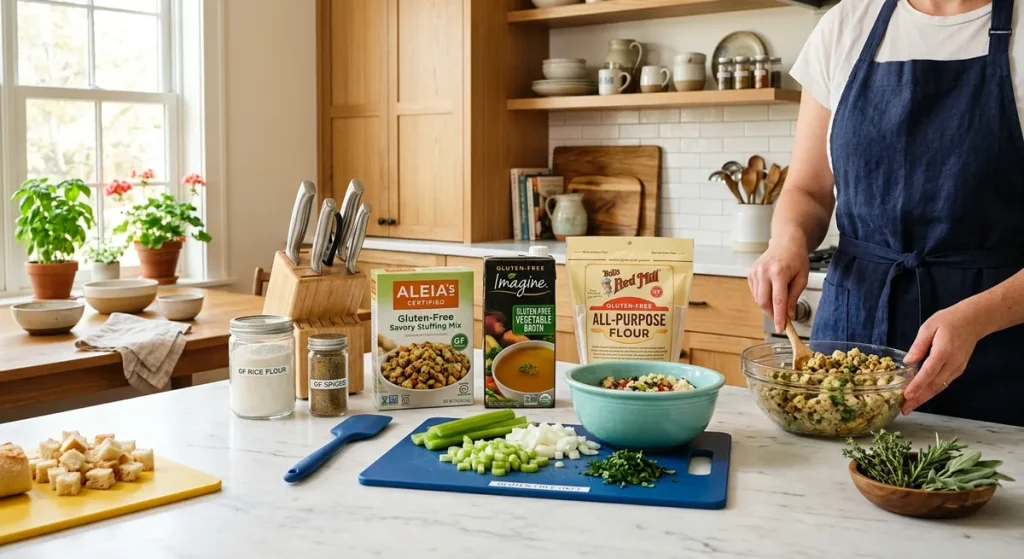
There are a handful of dishes where swapping a product makes all the difference. Here are the ones I use every year — plus a few to avoid.
Certified gluten-free by the Gluten-Free Certification Organization (GFCO) and tastes remarkably close to traditional stuffing. My boys couldn’t tell the difference — and that is the highest possible endorsement in this house.
Stuffing
GFCO-certified. Sage and onion variety is closest to classic stuffing flavor. Available at many Whole Foods Market and online retailers. ~$7–$9 per box.
Made in a dedicated gluten-free facility. Rich, herby flavor that holds up well when baked. A strong runner-up and often easier to find online. ~$8–$10 per bag.
Canyon Bakehouse Gluten-Free Country White Bread is GFCO-certified and toasts beautifully for homemade stuffing. More work but the best flavor payoff. ~$6–$8 per loaf.
Gravy
Gravy is traditionally thickened with wheat flour — which means most jarred gravies and from-scratch recipes are off the table. The good news: both cornstarch and sweet rice flour make exceptional GF gravies with the same rich consistency.
Bob’s Red Mill Sweet White Rice Flour is certified gluten-free and creates a smooth, lump-resistant roux. This is what I use every year. ~$4–$5 per bag.
Pacific Foods labels their Turkey Gravy as gluten-free and it’s widely available at Target, Whole Foods, and Costco. Best store-bought option when time is short. ~$4–$5 per carton.
If you’re making gravy from scratch, starting with a certified GF broth matters. Progresso labels their broth gluten-free. ~$3–$4 per carton.
Pie Crusts & Desserts
Ready-made, certified GF, and holds up beautifully for pumpkin pie or apple pie. A total time-saver. Available at Whole Foods and many mainstream grocery stores. ~$6–$8.
If you want to make pie crust from scratch, Cup4Cup is the gold standard for pastry applications. Developed by chefs, it performs like all-purpose flour in most recipes. ~$10–$13 per bag.
GFCO-certified and ideal for cakes, cookies, and quick breads. King Arthur is one of the most reliable GF baking brands on the market. ~$10–$14 per bag.
Naturally GF desserts that require zero substitutions: flourless chocolate cake, crème brûlée, panna cotta, meringues, and our Creamy Gluten-Free Cheesecake with a Graham Cracker-Style Crust. Any of these are showstopper options that will impress guests — GF or not.
Products to Avoid
- Swanson Chicken Broth (original) — Not labeled gluten-free and may contain hydrolyzed wheat protein. Check labels carefully.
- French’s Original Crispy Fried Onions (regular) — A popular green bean casserole topper that contains wheat flour. Use French’s Gluten Free Crispy Fried Onions instead — they do make one.
- Regular soy sauce — Contains wheat. Always swap for Kikkoman Gluten-Free Soy Sauce or San-J Tamari when soy sauce appears in a recipe.
- “Made in a facility” labeled products — For celiac guests, products that say “made in a facility that also processes wheat” carry real risk. Read our “May Contain Gluten” Explained in Plain English before shopping.
Your Complete Gluten-Free Holiday Meal Timeline
The biggest stress in holiday cooking isn’t the food itself — it’s trying to do everything at once. A solid timeline prevents that completely. Here’s the one I follow every year for a gluten-free Thanksgiving or Christmas dinner.
| When | Task | Why It Matters |
|---|---|---|
| 3 weeks out | Order specialty GF products online | GF stuffing, pie shells, and specialty flours sell out near holidays |
| 2 weeks out | Communicate with guests | Set expectations, assign dishes, prevent accidental gluten |
| 1 week out | Deep-clean kitchen; check all pantry staples | Remove contamination risks; verify every ingredient is GF |
| 3–4 days out | Bake GF desserts; freeze if needed | GF baked goods often improve with a day of rest |
| 2 days out | Make stock/broth for gravy; thaw turkey | Homemade broth tastes better and you control every ingredient |
| Day before | Prep sides, cube stuffing bread, make cranberry sauce | Reduces day-of chaos significantly |
| Morning of | Set up separate GF prep zone; label all serving utensils | Visual cues prevent cross-contamination during the meal |
If you want a full meal planning system beyond just the holidays, our Complete Gluten-Free Meal Plan: 4 Weeks of Easy Dinners is a great resource to have bookmarked year-round.
Our Top Gluten-Free Holiday Recipes to Anchor Your Menu
You don’t need to reinvent the holiday table. You just need reliable, tested recipes for each major dish. Here are the ones I serve every year — all thoroughly tested in my own kitchen with my family of four.
🛒 The LGGF Holiday Table — Recipe Lineup
- Gluten-Free Thanksgiving Stuffing — herby, moist, and the dish guests ask about first
- Best Gluten-Free Gravy — rich and smooth, made with turkey drippings and rice flour
- Moist Gluten-Free Cornbread — perfect alongside turkey or as a stuffing base
- Gluten-Free Pumpkin Pie — classic custard filling in a buttery GF crust
- Warm Gluten-Free Apple Crisp with Crunchy Oat Topping — the easiest dessert on the table
- Creamy Gluten-Free Cheesecake — naturally GF with a graham cracker-style crust
- Best Gluten-Free Christmas Cookies — festive, buttery, and perfect for decorating with kids
For a festive appetizer that everyone loves while dinner is being finished, our Best Gluten-Free Spinach Dip is always a crowd-pleaser. Serve it with GF crackers or veggies and it buys you that crucial last hour of cooking time in peace.
Common Mistakes to Watch Out For When Hosting Gluten-Free
Even experienced gluten-free cooks make these mistakes during the holiday rush. Knowing them in advance is half the battle.
- Not reading labels on every single product, every time. Manufacturers change formulas. A product that was safe last Thanksgiving may have changed facilities or added a wheat-derived ingredient. Check labels even on products you’ve bought before.
- Forgetting about hidden gluten in turkey and ham. Some pre-basted or pre-seasoned turkeys contain wheat-based broth or seasonings. Always buy a plain, fresh or frozen turkey and season it yourself, or verify the ingredient list explicitly. Same goes for glazed hams.
- Using the same cookware you use for regular baking. If you typically make regular flour-based pies or rolls, clean your pans with hot soapy water and dry thoroughly. For cast iron, consider dedicating separate pieces to GF cooking.
- Letting guests contaminate serving dishes. The most common scenario: someone uses the stuffing spoon to scoop something, then puts it back in the mashed potatoes. Assign separate, clearly labeled serving spoons to every dish and ask guests not to switch them.
- Assuming wine and spirits are safe without checking. Most wine is gluten-free, but some beer, malt beverages, and flavored spirits are not. Beyond Celiac has updated guidance on alcohol for celiac patients.
- Waiting until the last minute to find GF products. Every year without fail, GF stuffing and pie crusts sell out at major grocery stores in the week before Thanksgiving and Christmas. Order online in early November or buy extra in October.
Frequently Asked Questions
Yes — but it requires thorough preparation. Clean all countertops, cutting boards, and cookware with hot soapy water before you begin. Use dedicated utensils and, ideally, fresh pots and pans or ones you know haven’t been used for wheat-based cooking. Finish any gluten-containing baking (like dinner rolls) well before starting GF dishes, and clean the kitchen again in between. For someone with celiac disease, this level of care is genuinely necessary.
A plain, unflavored turkey is naturally gluten-free. However, many store-bought turkeys are pre-basted or injected with a broth solution that may contain wheat. Always read the ingredient label before buying. Brands like Butterball offer some gluten-free options, but verify the specific product you purchase each year since formulations can change.
The easiest swap is to thicken your gravy with cornstarch instead of wheat flour. Use one tablespoon of cornstarch per cup of liquid, mixed into a slurry with cold water before adding to the hot drippings. It creates a smooth, glossy gravy that tastes virtually identical to traditional versions. For a deeper flavor base, use certified GF turkey or chicken broth and deglaze the roasting pan thoroughly.
The safest and least stressful approach is to make the entire meal gluten-free. Honestly, most guests won’t notice — especially if you’re using quality GF products and recipes. If you do have gluten-containing dishes (like regular dinner rolls for guests who want them), keep them on a completely separate table or station with their own serving utensils, away from the GF dishes. Never put them on the same serving table where cross-contact can happen.
The most rigorous certification is from the Gluten-Free Certification Organization (GFCO), which requires products to test below 10 parts per million of gluten — stricter than the FDA’s 20 ppm standard. Look for the GFCO logo (a circular emblem with a grain and a checkmark) on product packaging. NSF Certified Gluten-Free is also a respected certification. Learn more about what these certifications actually mean in our article on The Gluten-Free Certification Scam: Why That Label Doesn’t Mean What You Think.
Stay calm — this happens, and you can handle it gracefully. Set the dish aside on a completely separate surface away from your GF foods. Thank the guest genuinely (they meant well) and explain that you need to keep it separate to protect your celiac guests. It’s perfectly fine to say, “We can put that on the side table for guests who eat gluten — I want to make sure no one gets sick.” Having a backup GF side dish ready for this exact scenario is always a good idea.
You’ve Got This: Your Gluten-Free Holiday, Handled
Hosting a gluten-free holiday meal is absolutely doable — and it gets easier every year. The key is to treat it as a planning challenge, not a cooking challenge. Build your menu around naturally GF foods, use certified products for the high-risk dishes, communicate clearly with guests, and set up your kitchen to prevent cross-contamination before anyone arrives.
The holidays are supposed to be about being together, and no one at your table should spend the evening worrying about getting sick. With the right prep, your celiac guests can eat everything on the table — and your other guests will likely never even realize the whole meal was gluten-free. That is, until you tell them. And you should, because it’s genuinely impressive.
If this is your first year hosting gluten-free, don’t try to do it all at once. Pick three or four trusted recipes, order your specialty products early, and lean on the resources we’ve put together here at LetsGoGlutenFree.com. You’ve got this — and we’re here every step of the way.
