Going gluten-free is hard. Not “mildly inconvenient” hard — truly, deeply, emotionally exhausting hard. If you’re a few weeks or months in and still struggling, I want you to know: you are not doing it wrong. The gluten-free lifestyle is genuinely one of the most demanding dietary shifts a family can make, and the reasons why go far beyond just swapping out bread.
I remember standing in the grocery store after my celiac diagnosis, reading the back of a soup can for the fourth time, eyes filling with tears because I still wasn’t sure if it was safe. That moment — equal parts frustration, fear, and loneliness — is something so many families in the gluten-free community share. You’re not alone in it.
Going gluten-free is hard because it touches every part of family life: what you cook, where you eat out, what your kids bring to school, and how you celebrate holidays. It’s not a simple swap — it’s a full lifestyle overhaul. Understanding why it’s so hard is the first step to making it more manageable.
In this article, I’m breaking down the real reasons gluten-free life still feels overwhelming for so many families — and giving you practical, honest strategies to ease the load. Whether you’re newly diagnosed or years in and hitting another wall, this one’s for you.
Key Takeaways
- The gluten-free diet is hard for families because it involves label reading, cross-contamination risks, high costs, social isolation, and emotional burnout — not just food swaps.
- Cross-contamination at home, school, and restaurants is one of the biggest ongoing challenges for people with celiac disease.
- The cost of certified gluten-free products is significantly higher than conventional foods, creating real financial strain.
- Children with celiac disease face unique social challenges, from birthday parties to school lunches, that affect the whole family.
- There are concrete strategies — apps, meal plans, certified brands, and community support — that can genuinely reduce the daily burden.
The Label Reading Learning Curve Is Steeper Than Anyone Warns You About
When you first go gluten-free, you quickly realize that “just avoid bread and pasta” is wildly oversimplified advice. Gluten hides in soy sauce, malt vinegar, modified food starch, certain spice blends, medications, and dozens of other unexpected places. Learning to decode food labels is practically a part-time job.
The U.S. Food and Drug Administration requires that foods labeled “gluten-free” contain fewer than 20 parts per million of gluten — but that label is voluntary. Many manufacturers don’t label at all, which leaves you doing investigative work on every single product. Even “wheat-free” doesn’t mean gluten-free, since barley and rye also contain gluten.
Common hidden gluten sources that trip up even experienced GF families include soy sauce (which is typically brewed with wheat), seasoning packets, communion wafers, and even some medications. Our gluten-free checker is a good place to start.
The good news: it does get easier with time and practice. Many families find that using a trusted app like the Gluten-Free Scanner or Fig — covered in our roundup of best digital tools for busy gluten-free families — dramatically cuts down research time.
Cross-Contamination Is a Constant, Invisible Threat
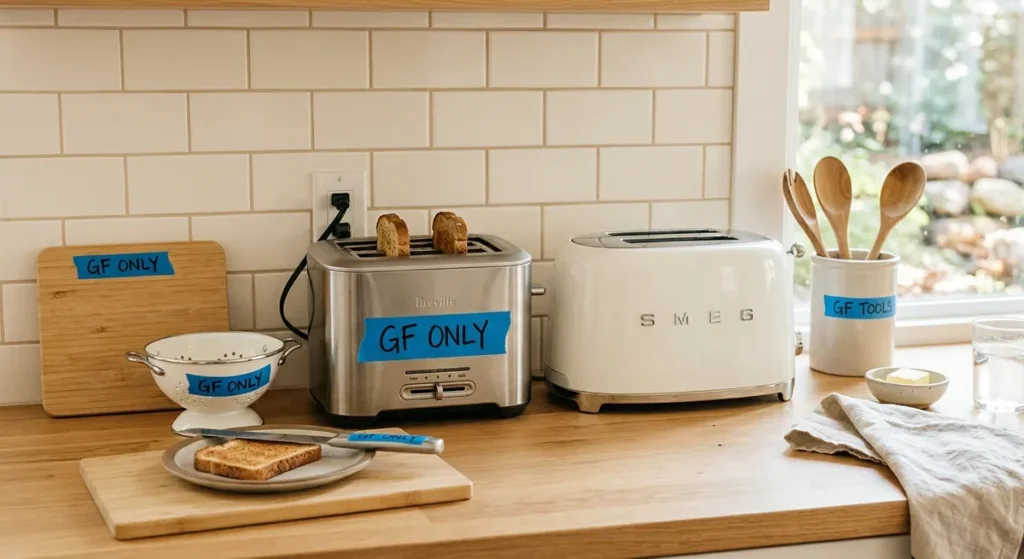
Even when you’ve mastered label reading, cross-contamination can undo all of that work in an instant. For people with celiac disease, according to the Celiac Disease Foundation, even tiny amounts of gluten — as little as a crumb — can trigger an immune response and cause intestinal damage. That’s not a preference. That’s a medical reality.
Cross-contamination happens in so many ways families don’t initially anticipate. A shared toaster. A pasta pot not fully cleaned. A wooden cutting board that holds gluten residue in its grooves. A well-meaning grandparent who uses the same knife for regular bread and the GF bread. It’s exhausting to police all of it, especially in a household with gluten-eating family members.
Dining out adds another layer of risk. Many restaurants claim to offer gluten-free options but prepare food on shared surfaces with gluten-containing foods. Our in-depth guides on restaurants like Olive Garden’s gluten-free pasta and Subway’s gluten-free bread break down what “gluten-free” actually means — and doesn’t mean — at popular chains.
And for families with school-age kids, the school cafeteria is a daily source of anxiety. If your child has had an incident, our article on what to do if your child gets glutened at school walks through exactly how to respond and advocate.
The Cost of Eating Gluten-Free Is a Real Barrier
Let’s be honest about something that doesn’t get talked about enough: gluten-free food is expensive. A loaf of certified gluten-free bread can run $7–$10 compared to $3–$4 for conventional bread. GF pasta, crackers, cereal, and snack bars all carry a significant premium. For families on tight budgets, this creates genuine hardship.
Research published by Beyond Celiac suggests that people with celiac disease spend significantly more on food annually than the average consumer. That’s a real economic burden, especially for families with multiple members who need to eat gluten-free.
The most effective way to manage GF food costs is to build meals around naturally gluten-free whole foods — rice, potatoes, beans, meat, eggs, fruits, and vegetables — rather than relying on specialty packaged products. Our comparison of store-bought vs. DIY gluten-free energy bars and granola is a great example of how making things at home can cut costs dramatically.
For quick, affordable weeknight dinners, our 10 gluten-free pasta dinner ideas use budget-friendly GF pasta brands and simple ingredients most families already keep on hand.
Social Isolation and Emotional Burnout Are Real — and Often Overlooked
Food is social. It’s birthday cake at a party, pizza at a school event, holiday cookies with grandma, and dinner out with friends. When every one of those situations becomes a logistical challenge or a source of anxiety, the emotional weight compounds fast. Many families describe feeling isolated, different, and just plain tired.
For kids especially, being the one who “can’t eat that” is painful. Austin and Alex know this feeling. When Alex was invited to a classmate’s birthday party, I spent two hours the night before making a safe cupcake he could bring so he wouldn’t be the kid watching everyone else eat cake. That’s just one example of the invisible labor gluten-free families carry constantly.
Adult caregivers also experience significant burnout. The mental load of researching safe restaurants, packing separate food for every event, fielding questions from well-meaning relatives who don’t understand the difference between preference and medical necessity — it adds up. Beyond Celiac has published data showing that people with celiac disease experience higher rates of anxiety and depression, and caregivers of children with celiac are significantly affected too.
Hosting events can feel especially daunting at first. But it gets easier — our guide on how to host a gluten-free holiday meal without stress has practical tips for turning your home into the safe space your whole family can relax in.
Navigating Restaurants, Schools, and Other People’s Homes
One of the hardest truths about going gluten-free is that you can control your own kitchen but not the rest of the world. Restaurants may be careless about cross-contamination. Other parents don’t always understand severity. Teachers offer well-meaning birthday treats without checking. Even close family members may dismiss your concerns as “overdoing it.”
Restaurant dining requires a completely different approach than before. You need to ask specific questions — not just “is this gluten-free?” but “is it prepared on a shared surface, with shared utensils, or in shared fryer oil?” Some chains have better protocols than others. Fast food is particularly tricky: our guides on McDonald’s fries and gluten-free French fries in general explain exactly why shared fryers are such a significant risk.
Schools are another challenge. You’ll need to work closely with teachers, the nurse, and cafeteria staff to create a safe plan. According to the National Institute of Diabetes and Digestive and Kidney Diseases, children with celiac disease may qualify for a 504 plan that legally protects their right to safe accommodations at school.
Common Mistakes That Make Gluten-Free Life Harder Than It Needs to Be
Avoid These Common GF Family Mistakes
- Relying only on specialty GF packaged products instead of naturally GF whole foods (costs skyrocket)
- Skipping the conversation with restaurants — assuming “GF menu” means truly safe preparation
- Forgetting that cross-contamination can happen from shared cooking utensils, not just ingredients
- Not checking medications and supplements for gluten — they can be hidden sources
- Waiting until you’re at an event to realize there’s nothing safe to eat (always call ahead or bring food)
- Going it alone — not connecting with celiac organizations, dietitians, or GF community groups for support
Frequently Asked Questions
Yes — genuinely. The first three to six months are typically the steepest part of the learning curve. As label reading becomes second nature and you build a trusted list of safe brands and restaurants, the daily cognitive load drops significantly. Most experienced GF families report that it becomes a manageable routine rather than a constant crisis.
Frame it medically rather than as a preference. Explain that celiac disease is an autoimmune condition recognized by the National Institutes of Health, and that even a small amount of gluten triggers an immune response that damages the small intestine — regardless of symptoms. Sharing a reputable resource like the Celiac Disease Foundation’s explainer can help make it feel real to skeptics.
The FDA’s threshold for gluten-free labeling is fewer than 20 parts per million (ppm), which research suggests is the lowest reliably measurable and manageable level for most people with celiac disease. However, some individuals are more sensitive than others. Our detailed article on safe gluten levels for celiac disease management covers this topic in depth.
It can be, but it requires attention. Many gluten-free packaged products are not enriched with the vitamins and minerals that conventional wheat-based foods are required to add. People with celiac disease are also at higher risk for deficiencies in iron, folate, B vitamins, calcium, and vitamin D, especially before diagnosis. Work with a registered dietitian who specializes in celiac disease to ensure you’re meeting nutritional needs.
The most reliable strategy is to always send a safe treat with your child for events where food will be served — so they’re never sitting empty-handed. Call ahead to event hosts when possible. For school, work with teachers at the beginning of the year to establish a classroom snack policy. Our article on what to do if your child gets glutened at school also offers proactive prevention strategies.
You’re Not Alone — and It Really Does Get Easier
Going gluten-free is hard for families because it requires constant vigilance across every corner of daily life — not just dinner. The label reading, the cross-contamination risks, the social challenges, the financial strain, and the emotional burnout are all real, valid, and shared by millions of families navigating this same path. You are not being dramatic, and you are not alone.
The families who find their footing in the gluten-free world are the ones who stop trying to do it perfectly and start building reliable systems instead: a safe kitchen setup, a list of trusted brands, a few go-to restaurants, and a meal planning routine that takes the daily guesswork away. It gets better — I promise. The early chaos eventually becomes a manageable new normal.
If you’re in those hard early months, the best thing you can do is arm yourself with good information and real support. Start with our free resources below — because you deserve to feel confident, not constantly anxious, about feeding your family.
🛒 Your Gluten-Free Family Starter Resources
- Download our free 4-Week GF Meal Plan with grocery lists built in
- Bookmark the Best Digital Tools for GF Families for apps that make label reading faster
- Read up on safe gluten levels so you can advocate confidently
- Check the Celiac Disease Foundation for medically reviewed patient resources
- Connect with Beyond Celiac for community, research updates, and emotional support
