
Sending your child to school with celiac disease or a serious gluten sensitivity can feel terrifying — especially in the first few months. You’re handing them over to a building full of well-meaning adults who may have never heard of cross-contact, don’t know what to look for on a label, and definitely haven’t thought twice about the playdough in kindergarten or the birthday cupcake at the class party.
You are not being overprotective. You are being a good parent. And the teachers in your child’s life genuinely want to help — they just need the right information from you.
When my son Austin was diagnosed at age five, talking to his kindergarten teacher was one of the scariest conversations I had that year. I didn’t want to seem like “that mom.” But once I came prepared with a simple explanation, a written plan, and a collaborative attitude, his teacher became one of our biggest allies. Learning how to talk to teachers about your child’s gluten-free needs is a skill — and this guide will walk you through exactly how to do it.
Below, I’ll cover what to explain, what questions to ask, how to handle classroom snacks and parties, and how to make sure your child feels included — not singled out — every single day.
Key Takeaways
- You’ll know exactly what to say when you sit down with your child’s teacher, including how to explain celiac disease in plain language.
- You’ll have a clear list of questions to ask before the school year starts so nothing falls through the cracks.
- You’ll learn how to handle classroom snacks, birthday parties, and art projects without making your child feel left out.
- You’ll understand what cross-contact means and how to explain it simply to school staff who’ve never heard the term.
- You’ll walk away with tools — a written plan, safe snack list, and communication strategies — that make the school year less stressful for everyone.
Start with the Basics: What Teachers Actually Need to Know
Most teachers are not medical experts, and that’s okay. Your job isn’t to turn them into one — it’s to give them the specific, actionable information they need to keep your child safe in their classroom. Keep it simple, stay friendly, and focus on what matters most.
Here’s what every teacher should understand before your child spends a single day in their room:
- Celiac disease is a medical condition, not a preference. According to the Celiac Disease Foundation, even a small amount of gluten — as little as 20 parts per million — can trigger an immune response in a child with celiac disease. This isn’t picky eating.
- Cross-contact is a real risk. This means gluten from one food can transfer to another through shared hands, surfaces, utensils, or crumbs. A pretzel cracker crumbled on the table before your child sits down can be enough to cause a reaction.
- Reactions can look different in every child. Some kids get stomach pain or diarrhea. Others experience headaches, brain fog, joint pain, or a skin rash called dermatitis herpetiformis. A few children don’t show obvious symptoms at all — but intestinal damage is still happening.
- It is not an allergy in the traditional sense. Celiac disease is an autoimmune condition. There’s no EpiPen, and it’s not life-threatening in the same way a peanut allergy is — but ongoing exposure causes serious long-term damage.
Questions to Ask Before the School Year Begins
Don’t wait for a problem to come up. Request a brief meeting with your child’s teacher — and ideally the school nurse — before or during the first week of school. Come with questions. This signals that you’re a partner, not a problem.
Questions to Ask at Your First School Meeting
- Does the class have a shared snack policy? What foods are typically brought in?
- Are there any food-based classroom activities I should know about in advance? (Think playdough, art projects with pasta, cooking units)
- How do you handle birthday treats and classroom celebrations?
- Is there a school nurse or 504 coordinator I should also meet with?
- Where will my child eat — at a communal table or designated area?
- How can I send in safe alternatives so my child is never left without something to eat?
- What’s the best way to communicate with you when upcoming events involve food?
Most teachers will welcome this conversation. They’d rather know ahead of time than accidentally give your kid a gluten-filled pretzel at snack time and get a panicked phone call from you at noon.
How to Handle Classroom Snacks, Parties, and Food-Based Activities
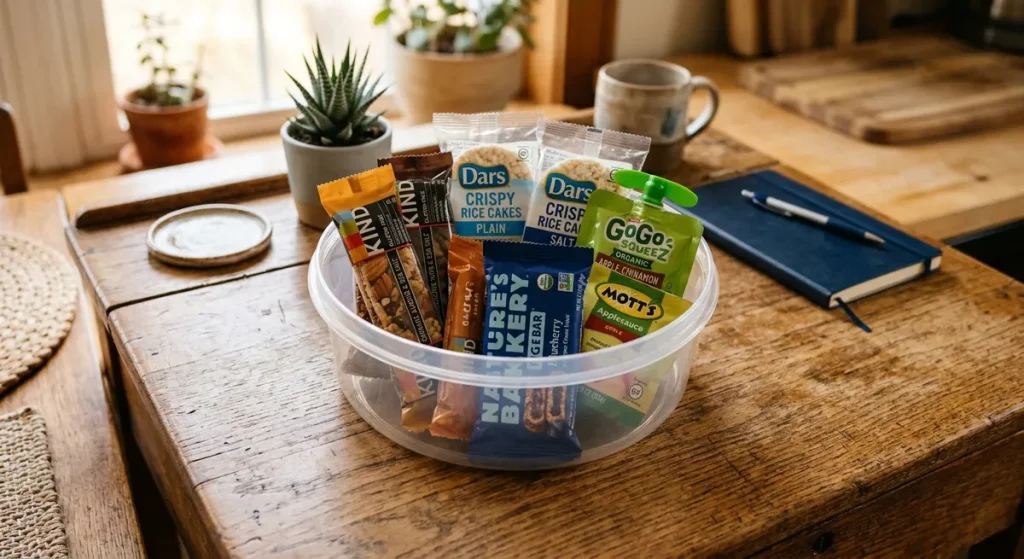
This is the area where most parents feel the most anxiety — and honestly, where things go sideways most often. A well-meaning parent brings in birthday cupcakes, or a teacher uses pretzels for a counting activity, and suddenly your child is either left out or at risk.
Here’s how to get ahead of it.
Classroom Snacks
Ask your teacher whether the class follows a shared snack schedule. If they do, offer to provide a list of naturally gluten-free snack options that work for everyone — things like popcorn, raisins, apple slices, grapes, or certified gluten-free brands like RXBAR Kids or LesserEvil Paleo Puffs. Many teachers will happily share this with other families.
Also send a “safe snack stash” in your child’s backpack or keep one in the classroom. If an unplanned treat shows up, your child always has something comparable waiting. This is the single most effective way to keep your child from feeling left out.
Birthday Parties and Classroom Celebrations
Ask your teacher to give you a heads-up — even a day or two in advance — when a celebration involves food. That’s all you need. You can send a safe cupcake or cookie from home that looks just as festive as whatever the other kids are eating. My boys always get excited about their “special treat” from mom, and honestly it’s become a non-issue.
If your child is old enough, loop them into this plan so they feel empowered rather than embarrassed. A six-year-old who knows “I have my own cupcake in the teacher’s mini-fridge” handles celebrations very differently than one who finds out at the last minute they can’t eat what everyone else has.
Food-Based Art and Science Projects
This one surprises a lot of parents. Homemade playdough is made with wheat flour. Pasta is glued to art projects. Some sensory bins use oats or wheat products. These are all contact risks for a child with celiac disease.
Ask your teacher at the start of the year if they plan any food-based projects, and offer safe alternatives. Gluten-free playdough exists (you can even make it at home with rice flour), and craft pasta made from corn or rice works just as well. Most teachers are grateful for the suggestion rather than offended by the request.
Explaining Cross-Contact Without Scaring Anyone
Cross-contact is one of the hardest concepts to explain to someone who doesn’t live with celiac disease. Use simple, relatable language — not medical jargon. Here’s how I explain it to teachers:
“Imagine a child who’s allergic to peanuts. Even trace amounts of peanut residue on a surface can cause a reaction. It works the same way for [child’s name] with gluten. If a classmate handles wheat crackers and then passes my child a pencil, the crumbs on their hands can be enough to cause a real reaction.”
That analogy lands every time. Teachers who already have experience with food allergies in their classroom get it immediately. For teachers who haven’t dealt with it before, it gives them a framework they understand.
Helping Your Child Feel Safe and Included at School
Food is social. Snack time, lunch, celebrations — these moments matter to kids. The goal isn’t just physical safety. It’s making sure your child never feels like an outsider in their own classroom.
Involve your child in the conversation as much as their age allows. Kids who understand their diagnosis and feel ownership over their food safety are far more likely to speak up when something doesn’t seem right. That self-advocacy skill will serve them long after they’ve left your care.
Common Mistakes Parents Make When Talking to Teachers
- Waiting until a problem happens. Don’t assume the school will figure it out. Be proactive on day one.
- Only talking to the teacher. The school nurse, lunchroom staff, substitute teachers, and field trip chaperones also need to know. Ask your teacher or 504 coordinator who else should be in the loop.
- Using too much medical jargon. Keep your explanation simple. “Even tiny crumbs make him sick and it damages his intestines” is more effective than a detailed immunology lesson.
- Skipping the written plan. Verbal conversations get forgotten. A written one-page document gets pinned to the wall.
- Not providing a safe snack option. If you ask the school to keep your child safe but send nothing for them to eat when other kids have treats, you’re creating an awkward situation for the teacher. Make it easy for them to say yes.
- Forgetting to update staff each year. Every new school year, new teacher, or new classroom means starting the conversation fresh. Don’t assume information carries over.
Frequently Asked Questions
Possibly, yes. Celiac disease may qualify as a disability under Section 504 of the Rehabilitation Act, which requires schools to provide reasonable accommodations. This can include safe food options, modified seating at lunch, and advance notice of food-based activities. Contact your school’s 504 coordinator or special education director to start that process.
Start by putting your concerns in writing via email — it creates a record. If the teacher continues to be unresponsive, escalate to the school principal or, if your child has a 504 plan, your child’s 504 coordinator. Bring a letter from your child’s diagnosing physician describing the medical necessity of a strict gluten-free diet. Documentation matters.
Keep it simple and age-appropriate: “My tummy gets really sick when I eat bread or crackers made the regular way, so I eat different ones.” Most kids accept this immediately and move on. Some teachers are open to doing a brief class discussion about food differences — ask yours if that feels right for your child.
Look for individually wrapped, clearly labeled gluten-free options that don’t require refrigeration. Good choices include RXBAR Kids, Enjoy Life Foods Mini Chocolate Chips, certified gluten-free rice cakes, fruit pouches, or simple raisins. Keep a small sealed container in the classroom and restock it monthly. Check out our Gluten-Free Snacks for Work and School list for more ideas.
That’s a big ask, and most schools won’t go that route unless the child has a severe allergy and a 504 plan in place. A more realistic and well-received approach is to provide a list of naturally gluten-free snacks that families can bring, keep a safe stash for your child, and ask for advance notice of food events. That covers most situations without putting an unfair burden on other families.
Your Child’s Best Advocate Is Already on the Job (That’s You)
Talking to teachers about your child’s gluten-free needs doesn’t have to be uncomfortable. Come prepared, be friendly and specific, put the important stuff in writing, and make it as easy as possible for teachers to do the right thing. The best outcome is a classroom where your child is safe, included, and never has to choose between eating what everyone else has and protecting their health.
You know your child better than anyone in that building. That’s your superpower. Use it to build a team around them — one teacher, nurse, and lunchroom staff member at a time. It gets easier every year, I promise.
Want a done-for-you resource to hand directly to your child’s teacher? Download our free School Lunch Guide — it includes 20 gluten-free school lunches kids will actually eat, plus a one-page classroom safety summary you can print and share.
