

On this page
Celiac disease and non-celiac gluten sensitivity can cause similar symptoms, but they are different conditions. Celiac disease involves an immune response that can damage the small-intestinal lining. Sensitivity can also affect daily life, without the characteristic celiac-type villous injury.
Use Same Symptoms, Different Stories to compare symptoms, the gut lining, immune responses and testing. Then read the full guide for the distinctions that matter when discussing a diagnosis, food choices and follow-up with your healthcare team.
Two Conditions. A Closer Look.
Same Symptoms.
Different Stories.
Explore what overlaps.
Discover what differs.
Beneath The Surface
02 / 04Celiac Disease
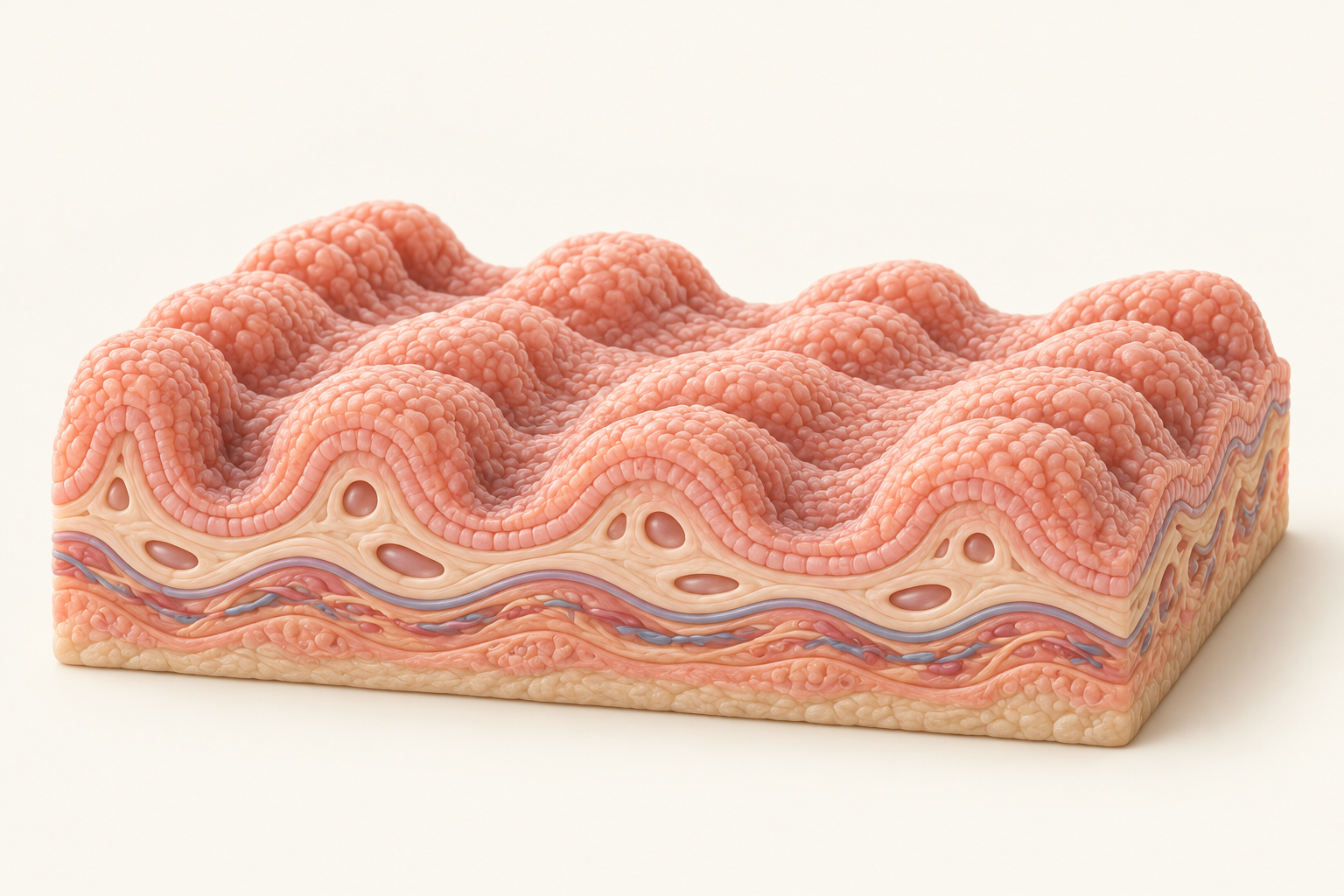
Possible Celiac-Type Injury
Villi Can Be Injured.
An immune response to gluten can damage the small intestine’s villi, reducing its ability to absorb nutrients.
Non-Celiac
Gluten Sensitivity
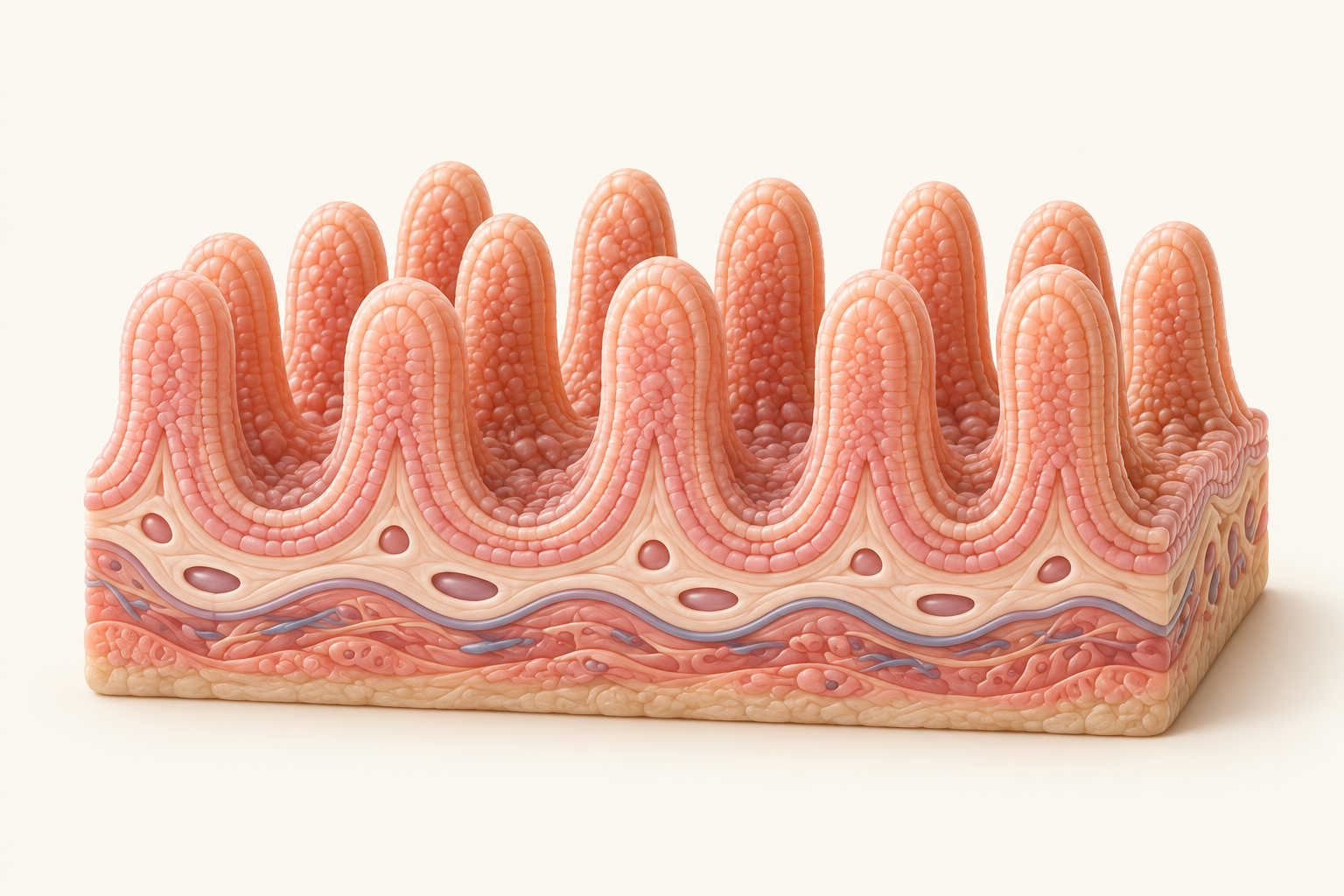
Without Celiac-Type Villous Injury
A Different Pattern.
It does not cause the characteristic celiac-type villous injury. That does not make the symptoms less real.
Teaching illustrations, not biopsy images. The celiac view shows a possible injury pattern; it does not depict every person with celiac disease.
Similar symptoms do not mean the same changes in the gut.
Educational comparison.
Not a personal assessment.
Read The Full Comparison
Symptoms
Celiac Disease
Bloating, abdominal pain, diarrhea and fatigue can occur. Some people have few or no obvious symptoms.
Celiac disease can look different from one person to another. Digestive symptoms are only part of the picture, and the absence of obvious symptoms does not exclude it.
Symptoms alone cannot establish a celiac diagnosis or show the condition of the intestinal lining. A clinician considers the history and appropriate tests.
Non-Celiac Gluten Sensitivity
Similar digestive symptoms and fatigue can occur. Their impact can be substantial, even without celiac-type injury.
Non-celiac gluten sensitivity can involve abdominal pain, bloating, bowel changes and symptoms such as fatigue. Symptoms deserve to be taken seriously.
Other conditions can produce similar symptoms. Feeling better on a gluten-free diet alone does not identify the cause or establish a celiac diagnosis.
- MedlinePlus · Gluten Sensitivity
- Celiac Disease Foundation · Non-Celiac Gluten/Wheat Sensitivity
- NIDDK · Diagnosis Of Celiac Disease
Similar symptoms cannot tell you which condition is present.
Examples of possible symptoms. People can have different combinations, and celiac disease may have few or no obvious symptoms.
Gut Lining
Celiac Disease
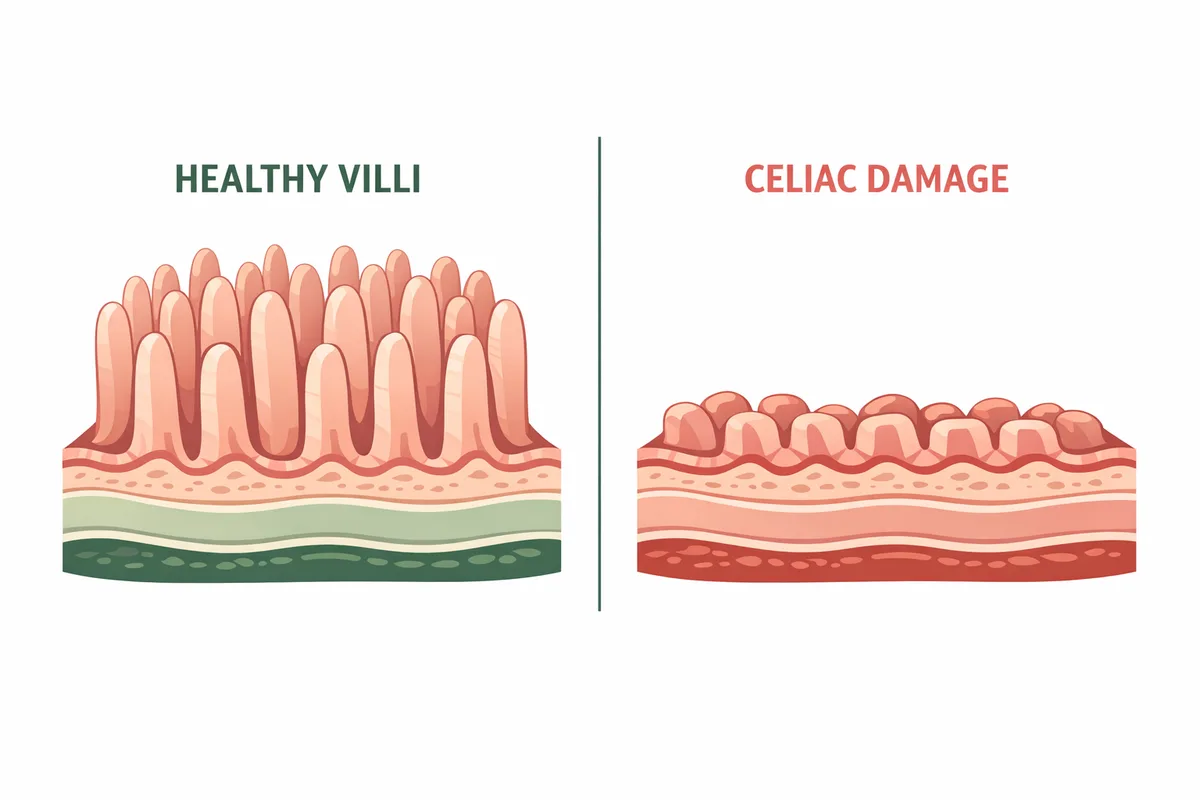
An immune response to gluten can damage the small intestine’s villi, reducing its ability to absorb nutrients.
Villi are tiny projections that help the small intestine absorb nutrients. Celiac disease can injure and flatten these projections.
The illustration is a simplified example of possible villous injury. It cannot show a visitor’s gut, how severe their symptoms are, or how well they have healed.
Non-Celiac Gluten Sensitivity
It does not cause the characteristic celiac-type villous injury. That does not make the symptoms less real.
Non-celiac gluten sensitivity is distinct from celiac disease and does not have its characteristic pattern of villous injury. It is not simply a milder stage of celiac disease.
Research into intestinal changes and immune responses in people with wheat sensitivity continues. This schematic is not a claim that every aspect of the gut is normal or that symptoms are harmless.
- NIDDK · Celiac Disease: Definition & Facts
- MedlinePlus · Gluten Sensitivity
- Celiac Disease Foundation · Non-Celiac Gluten/Wheat Sensitivity
Similar symptoms do not mean the same changes in the gut.
Teaching illustrations, not biopsy images. The celiac view shows a possible injury pattern; it does not depict every person with celiac disease.
Immune Response
Celiac Disease
In celiac disease, gluten triggers an immune response that can damage the body’s own small-intestinal tissue.
Celiac disease is a chronic immune disorder. In people with the condition, eating gluten triggers a response that can damage the small intestine.
The arrows summarize that relationship. They do not represent a complete immune pathway, or gluten physically scraping the gut lining.
Non-Celiac Gluten Sensitivity
The mechanisms are not fully understood. Gluten may not be the only trigger for symptoms after wheat-containing foods.
Researchers are investigating several possible mechanisms. Immune responses and other wheat components are being studied; a single established pathway does not explain every case.
For some people, wheat components such as fructans may contribute to symptoms. Fructans are carbohydrates, not gluten. This does not mean that everyone with sensitivity has the same trigger.
Celiac autoimmunity is established. Sensitivity mechanisms are still being studied.
Conceptual diagrams, not a complete biological pathway. Non-celiac gluten sensitivity is also called non-celiac wheat sensitivity.
Testing
Celiac Disease
Assessment usually includes blood tests and often small-intestinal biopsies, interpreted alongside your history.
Clinicians use the medical history, an examination and tests to diagnose celiac disease. Blood tests and small-intestinal biopsies are commonly used; the plan depends on the individual situation.
Starting a gluten-free diet before testing can affect results. If you already avoid gluten, ask a clinician how to proceed; do not restart it on the basis of this tool.
Non-Celiac Gluten Sensitivity
Assessment involves ruling out celiac disease and wheat allergy, considering other causes, and reviewing symptoms.
There is no single test that confirms non-celiac gluten sensitivity. A clinician first considers celiac disease, wheat allergy and other explanations for symptoms.
A structured review of symptoms and their relationship to food can be part of the assessment. A response to diet alone does not diagnose celiac disease, and wheat allergy is a separate condition.
- MedlinePlus · Gluten Sensitivity
- Celiac Disease Foundation · Non-Celiac Gluten/Wheat Sensitivity
- NIDDK · Diagnosis Of Celiac Disease
Discuss celiac testing before changing gluten intake. Diet changes can affect results.
These are examples of clinical assessment, not a required testing sequence for everyone. If already avoiding gluten, ask a clinician about a testing plan.

Key Takeaways
- Similar symptoms do not establish the same diagnosis. Abdominal pain, bloating, bowel changes and fatigue can overlap. Celiac disease can also occur with few or no obvious symptoms.
- Celiac disease can injure the villi. These small-intestinal projections help absorb nutrients. Sensitivity does not cause the characteristic celiac-type villous injury, but its symptoms still deserve attention.
- Testing needs context. Celiac assessment commonly uses blood tests and intestinal biopsies. There is no single confirmatory test for non-celiac gluten sensitivity.
- Discuss testing before changing gluten intake. A gluten-free diet can affect celiac test results. If you already avoid gluten, ask a clinician about a testing plan rather than restarting it yourself.
- Match the eating plan and follow-up to the diagnosis. Celiac disease requires a lifelong gluten-free diet. A dietitian can help maintain balanced nutrition and address practical problems such as cross-contact.
Celiac Disease: The Autoimmune Response
Celiac disease is a chronic immune disorder in which gluten triggers a response that can damage the body’s own small-intestinal tissue. Gluten is found in wheat, barley and rye. The disease affects more than digestion: damage can interfere with nutrient absorption, and symptoms may occur elsewhere in the body.
The lining contains tiny projections called villi. Injury can shorten or flatten them, a change called villous atrophy. The tissue block in the interactive shows one possible injury pattern. It is not a picture of every person with celiac disease, a way to measure symptom severity, or a demonstration of what one meal will do.
Antibody blood tests help clinicians investigate celiac disease. Antibodies to tissue transglutaminase, often abbreviated tTG, are among the markers used. It is misleading to reduce the disease to these antibodies directly destroying the villi. Test results are evidence within a wider assessment, not a photograph or damage score for the intestine.
Possible complications include anemia, malnutrition and bone problems. Some uncommon complications can be serious, which is one reason diagnosis and follow-up matter. These are possible outcomes, not a prediction for every person. NIDDK’s celiac disease overview explains the condition and its complications.
Symptoms also vary. A person who feels relatively well can still need treatment, while persistent symptoms in someone already avoiding gluten can have several explanations. NIDDK’s symptoms guide includes both digestive and other symptoms, and notes that people without symptoms can still develop complications if untreated.
Non-Celiac Gluten Sensitivity: What Is Known
Non-celiac gluten sensitivity, often shortened to NCGS, describes symptoms associated with gluten-containing foods in people who do not have celiac disease or wheat allergy. The term non-celiac wheat sensitivity is also used because gluten may not explain every reaction to wheat-containing foods.
Abdominal pain, gas, diarrhea, constipation and fatigue can occur. Some people also report headaches or other symptoms. The effect on everyday life can be substantial. The absence of characteristic celiac-type villous injury does not mean that symptoms are imagined or unimportant.
Researchers are still investigating the mechanisms. It is too definite to describe all NCGS as one proven innate-immune inflammatory pathway. Research into immune activity, intestinal changes and other wheat components continues. The interactive’s sensitivity illustration therefore avoids a “healthy” or “harmless” label.
There is no single test that confirms NCGS. Assessment considers celiac disease, wheat allergy and other possible causes, alongside the relationship between food and symptoms. Improvement on a gluten-free diet can be useful information, but it does not by itself diagnose celiac disease or identify which food component caused a problem. MedlinePlus’s gluten sensitivity guide describes the symptoms, assessment and nutritional considerations.
Celiac Disease Vs Gluten Sensitivity: A Side-By-Side Comparison
Use this table as a reference after exploring the interactive. It summarizes distinctions between the conditions, rather than ranking whose symptoms are worse or interpreting a particular test result.
| Feature | Celiac Disease | Non-Celiac Gluten Sensitivity |
|---|---|---|
| Symptoms | Digestive and other symptoms vary; some people have few or none. | Digestive symptoms and fatigue can overlap with celiac symptoms. |
| Immune Mechanism | An established autoimmune condition triggered by gluten. | Mechanisms remain under investigation; gluten may not be the only trigger. |
| Gut Lining | Can cause villous injury and impaired nutrient absorption. | Does not have characteristic celiac-type villous injury. |
| Blood Tests | Antibody tests support assessment and need clinical interpretation. | No single blood test confirms NCGS. |
| Genetics | Associated DQ2/DQ8 variants may help assessment in some cases; carrying them alone does not diagnose celiac disease. | These gene variants do not establish NCGS or explain a person’s symptoms. |
| Diagnosis | History, examination and tests; blood tests and intestinal biopsies are commonly used. | Assessment of symptoms after considering celiac disease, wheat allergy and other causes. |
| Diet And Follow-Up | A lifelong gluten-free diet, attention to cross-contact and clinical follow-up. | A symptom-management plan and nutritional support tailored to the individual. |
| Improvement | Symptom improvement and healing of the lining are different outcomes. | Changes in symptoms do not establish the same injury or healing process as celiac disease. |
Neither symptoms nor this table can resolve a diagnosis. In particular, it is not useful to compare a fixed celiac “healing time” with a fixed sensitivity “symptom time” as though those were the same measurement.
Why Getting The Right Diagnosis Matters
A diagnosis helps shape care beyond the choice of bread or pasta. For someone with celiac disease, it explains why avoiding gluten remains necessary even when symptoms settle. It also gives the healthcare team a reason to assess nutrition, recovery and possible associated problems.
- Follow-up: Celiac care may include antibody blood tests, assessment of nutrient deficiencies and additional investigations where appropriate. Not everyone needs the same test panel or schedule.
- Family history: Blood relatives of someone with celiac disease should discuss their situation with a clinician to decide whether testing is appropriate. A family history or an associated gene variant is not a diagnosis on its own.
- Food preparation: Celiac disease requires attention to cross-contact as well as ingredients. Gluten-free food can pick up gluten during storage, preparation or serving.
- Continuing symptoms: A negative celiac test does not explain every symptom. A clinician may consider another digestive condition, the circumstances of testing, or whether more investigation is needed.
Doctors most often use blood tests and small-intestinal biopsies to diagnose or rule out celiac disease, with additional tests in selected situations. Starting a gluten-free diet first can affect those results. NIDDK’s diagnosis guidance explains why test results are interpreted alongside medical and family history.
For an appointment, bring any previous results, describe your current diet, and note your symptoms and when they occur. Ask what the proposed tests can establish and how your existing gluten intake affects the plan. If you already avoid gluten, discuss next steps with your clinician; this guide does not ask you to restart it.
It is also worth separating food-label standards from individual injury predictions. A single concentration number cannot tell you what will happen to your intestine. Focus on a suitable gluten-free diet and cross-contact precautions rather than trying to calculate a personal safe exposure.
The Overlap Zone: Where It Gets Complicated
Symptoms, antibody results and tissue findings answer different questions. If they do not line up neatly, a clinician may review the diagnosis, current gluten intake, which tests were used and other possible causes. A single result should not be turned into a diagnosis by a comparison chart.
Genetic testing can help clinicians in selected situations, but carrying an associated DQ2 or DQ8 variant does not establish celiac disease. If testing is discussed, ask what question it is meant to answer and how the result would affect your care. It should not be used as a shortcut for interpreting symptoms or deciding on a personal monitoring schedule.
Wheat also contains fructans, fermentable carbohydrates within the group commonly called FODMAPs. They are not gluten proteins. In a randomized crossover trial by Skodje and colleagues, 59 adults with self-reported gluten sensitivity, after celiac disease had been excluded, experienced higher overall symptom scores with fructans than with gluten.
That result helps explain why researchers investigate wheat components separately. It does not prove that everyone with sensitivity reacts to fructans, establish a personal diagnosis, or provide a reason to remove many more foods without support. A dietitian can help interpret an eating pattern while protecting nutritional adequacy.
NCGS should not be presented as a proven early stage of celiac disease. The conditions are distinct. If symptoms change or a previous assessment leaves questions, ask about reassessment rather than assuming that sensitivity has “turned into” celiac disease or following a screening schedule based only on a gene result.
Continue with how gluten affects the gut, symptoms that can prompt a gut-health assessment, and gut-health testing options. Our guide to recovery and follow-up explores that separate question, while the Gut Health hub brings these topics together.
Frequently Asked Questions
Can You Have Gluten Sensitivity Without Celiac Disease?
Yes. Non-celiac gluten sensitivity is distinct from celiac disease and wheat allergy. Symptoms such as abdominal pain, bowel changes and fatigue can overlap, but there is no single confirmatory test for sensitivity. Assessment considers other causes before attributing symptoms to it.
Is Celiac Disease Worse Than Gluten Sensitivity?
Celiac disease can damage the small-intestinal lining and cause complications that need treatment and follow-up. Sensitivity can also have a substantial effect on daily life. Comparing how uncomfortable someone feels does not establish their diagnosis or measure intestinal injury; both deserve appropriate assessment.
Can Gluten Sensitivity Turn Into Celiac Disease?
Non-celiac gluten sensitivity is not an established early stage of celiac disease. A later celiac diagnosis does not by itself prove that one condition transformed into the other. If symptoms change or questions remain about earlier testing, discuss reassessment with a clinician rather than using a gene result or this comparison to predict progression.
How Is Each Condition Diagnosed?
Celiac assessment uses medical and family history, examination and tests, commonly antibody blood tests and small-intestinal biopsies. Sensitivity has no single confirmatory test; assessment considers celiac disease, wheat allergy and other explanations for symptoms. Discuss testing before changing gluten intake because diet changes can affect celiac results.
Do Both Celiac And NCGS Require A Strict Gluten-Free Diet?
Celiac disease requires a lifelong gluten-free diet with attention to cross-contact. People with sensitivity may benefit from a gluten-free diet, but the eating plan, degree of restriction and follow-up should be discussed with a clinician or dietitian. This comparison does not set a personal gluten allowance or recommend reintroducing gluten.
Different Conditions, Thoughtful Ongoing Care
For celiac disease, a gluten-free diet is lifelong. Many people improve with treatment, but feeling better and healing of the intestinal lining are different milestones. Follow-up may include blood tests and, in some cases, further biopsies. NIDDK’s treatment guidance explains the role of ongoing care.
For sensitivity, symptoms and nutritional needs also deserve a considered plan. Work with your healthcare team on the dietary approach that fits the assessment. Do not assume that either a stricter diet or a faster improvement proves a particular mechanism inside the gut.
Practical meals can be built around suitable gluten-free foods such as plain rice or potatoes, vegetables and unseasoned meat, fish or other appropriate protein sources. Check added ingredients and preparation, and discuss nutritional gaps with a dietitian. NIDDK’s eating and nutrition guide covers balanced gluten-free eating and cross-contact.
This article and its teaching illustrations provide general education. They do not diagnose a condition, interpret personal results or measure intestinal injury.